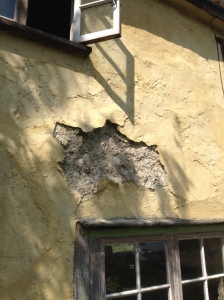
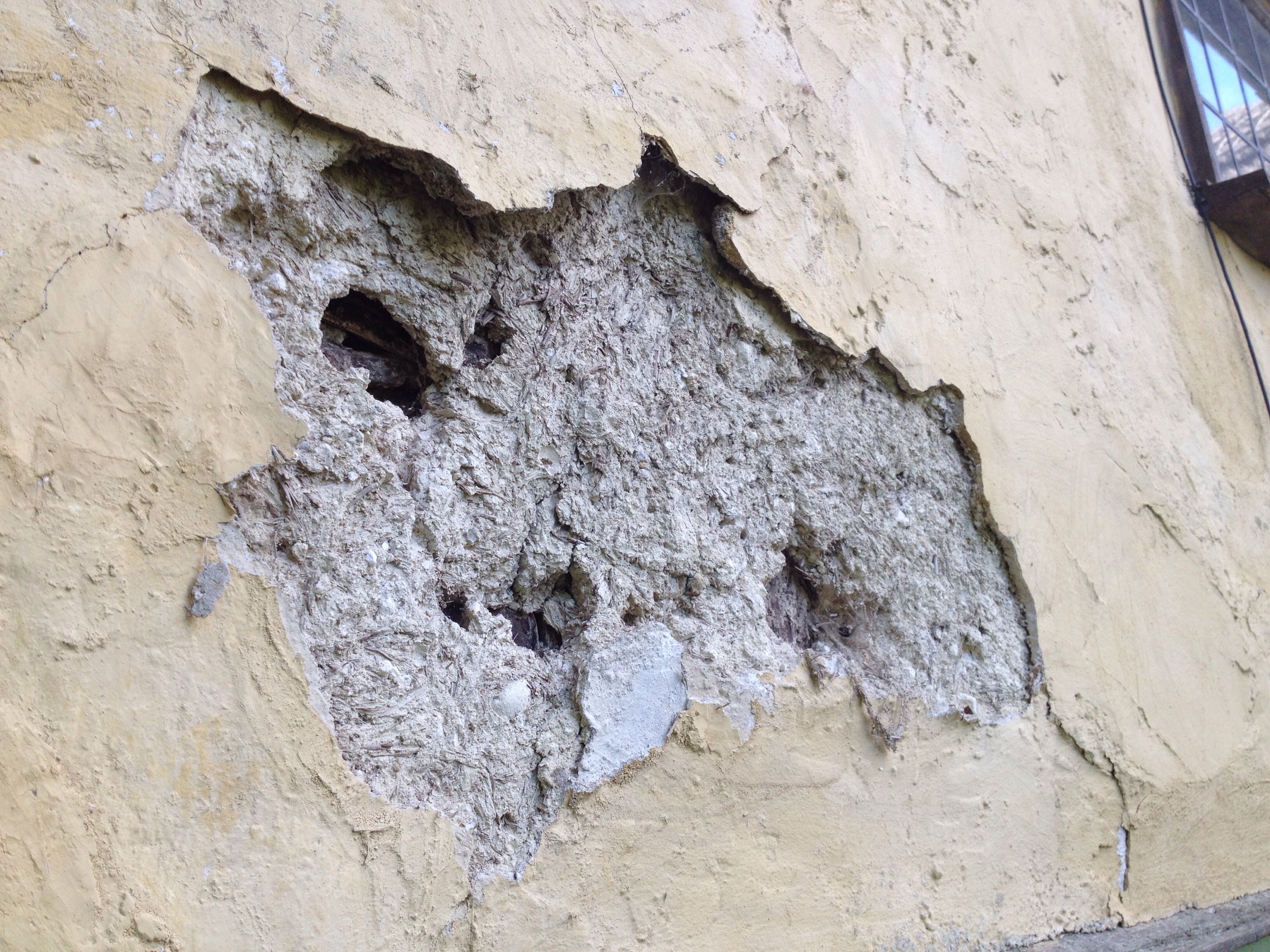
Went on holiday for 3 weeks, leaving the clay daub repairs till afterwards (see earlier post) – and this is what the woodpeckers have done to the bare patch, digging for insects while the house was empty. One of the holes is six inches deep. Won’t leave repairs so long next time…
Pond safety
We’ve been worrying about toddlers and the pond – not really an old house problem, but if you have a pond, see the latest post on the pond blog.
Back to daub

After focusing on a new timber framed extension for so long, we’re now back to repairing the old building. Weak bits of of a rough cement render have been dropping off the front wall, as the picture shows. The cement is just a thin layer skimmed a few decades ago onto clay daub.
We’ve been expecting this, but took a decision early on to let it happen by natural weathering, and then patch repair bit by bit. Looking at the evidence of what’s there, we think patching is the way the walls have been maintained for a very long time – any weakness, then they just slapped on a bit of clay and limewashed it, and owners only recently took to adding cement as well. Continue reading “Back to daub”
Adding an oak terrace
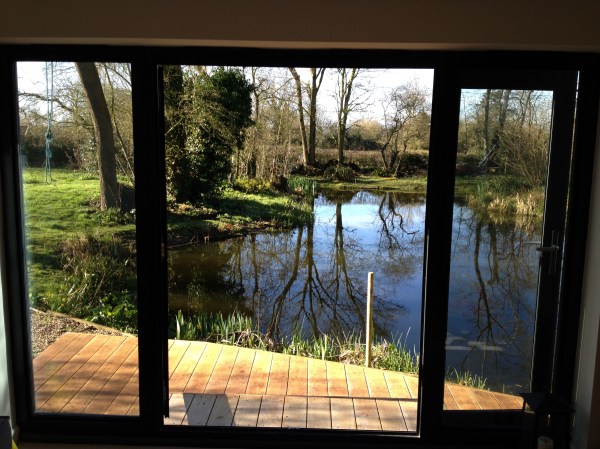
We needed something to connect the big glass doors with the pond, so we built an oak terrace cum patio.

It was to be an irregular shape because of the pond, so we drew it exactly, levelled the ground and dug nine post holes, into which were inserted short lengths of 100×100 mm fence posts, bedded in concrete. Continue reading “Adding an oak terrace”
Finishing touches
We’ve done a few small jobs to finish off round the extension over the last few months.

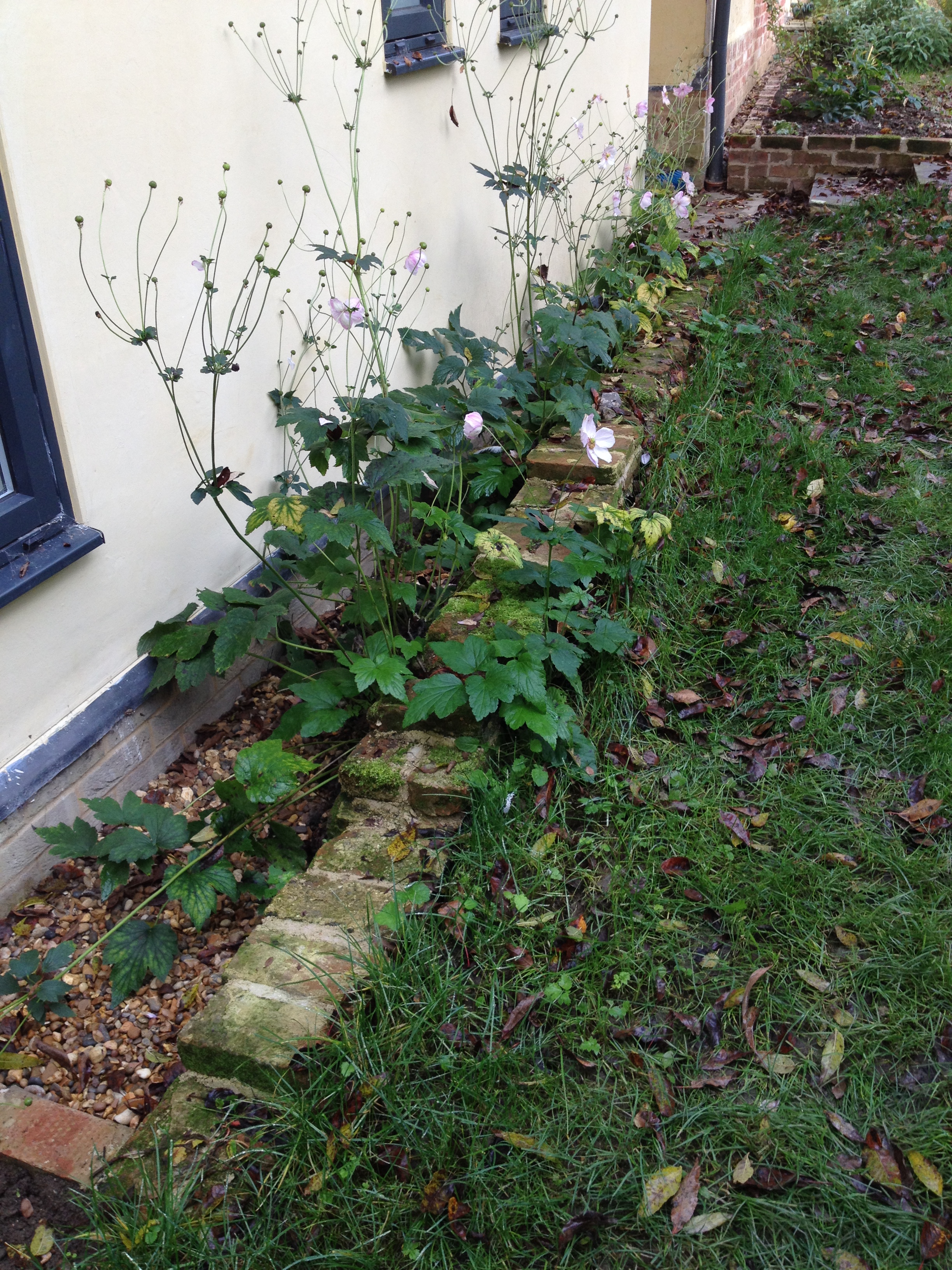
To show a bit of the the history of the site, we decided to keep some of the footings of the original building, which fell down decades ago (and whose previous existence played a big part in getting permission to rebuild). Part of the footings had been cut through for the main drain, and other parts had been damaged by machinery, so we ended up repairing them, using lime mortar.
The extension floor was dropped down a foot below the old ground level, so keeping the old footings meant creating a narrow trench along the side of the building, Continue reading “Finishing touches”
How to stop worrying and relax a little
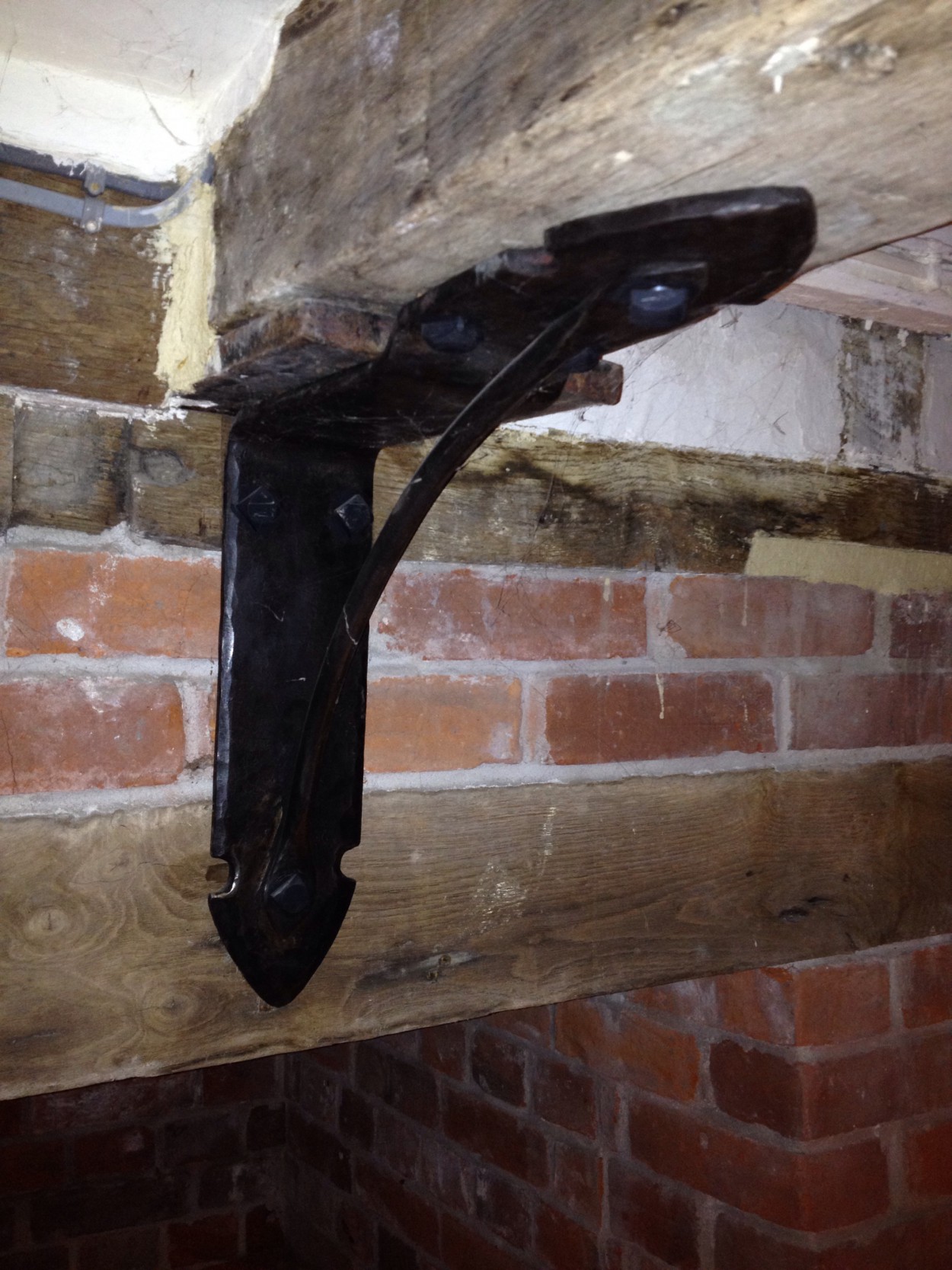
Sometimes it’s quite hard to relax when you live in an old house, because the lazily wandering eye will all too often spot something not quite right: a beam that suddenly seems to have too little support, or a pile of dust that might betray active wood pests. Nine times out of ten the risks spotted in that casual glance prove, on reflection, to be exaggerated, perhaps a function of the pessimistic frame of mind that develops when repairing an old house: the deeper you examine the building, the more problems you have to solve. Here are pictures of three things we did after staring rather a lot at potential problems. Probably only one of them was really necessary, but doing the other two made us feel better.

The first picture is of a wrought iron bracket we had made to reinforce the end of the biggest beam in the house, which does not quite meet the wall (a result of the repair of the chimney and fireplace which were leaning into the room but are now straight, which moved the bearing surface in the wall away from the timber). The beam end since then has rested not on a post but on a one inch thick steel slab inserted in the wall whose other end bears the weight of a beam and studs above. Solid and permanent, we were assured, but sitting in an armchair underneath, somehow it didn’t look right. The bracket bought piece of mind, and looks nice, too. Continue reading “How to stop worrying and relax a little”
PS on lime
I gather that there is questioning among some East Anglian lime specialists of the claim reported in the previous post that traditional hair mixes are significantly prone to failure.
As I mentioned, this is not about the well known deterioration of hair if it is left too long in a wet mix before being used, but about intrinsic faults in the hair, especially if it is imported. Continue reading “PS on lime”
Lime developments
I have to admit now that I have been a bit nervous about our new chalk lime plaster since last August, though I haven’t confessed it so far to the blog: we used imported pigs hair for the plaster in 2013, and more than a year after it was done I was speaking to another lime specialist who gave a deep intake of breath, frowned, and asked: has it fallen off yet? He seemed to relish recounting the story of another Suffolk house where the pig hair had disintegrated and the plaster coat had failed in the first year, on his version of the story because it had a foreign bug that had eaten it.
I’m now much more confident that our pig hair plaster is OK. There are no signs of failure, and from time to time over the autumn I pulled out a bit of hair near the surface and checked it for strength. I tried again this morning and the hair was as strong as ever. Continue reading “Lime developments”
Archaeologists find an ancient invoice
A rather large invoice has just arrived for work by Suffolk County Council archaeologists six years ago. It was a condition of planning permission that we paid for an archaeology report.
They established that we owned what had once been a brewhouse, and among other things they painstakingly troweled through layers of soil and took away bricks from the Brewhouse hearth to date them. Interested to learn as much as possible about the building, we chased their report a number of times over the following year, were twice promised it but nothing arrived, and we eventually gave up and forgot about it.
Then out of the blue an invoice for more than £4,500 landed in the postbox, and still no archaeology report. Six years before we would not have grumbled, because we had set aside the cash and would have liked to find out more about the building’s history, but after this length of time it’s a blow. When we pointed out that there was still no report, the council withdrew the invoice, and said the report would be available within the next two months. It wasn’t after two months, four months …. we wrote again, but no response. They must have lost all the paperwork. After six years going on seven, I really don’t think they can legally revive that invoice.
The Old Brewhouse saved
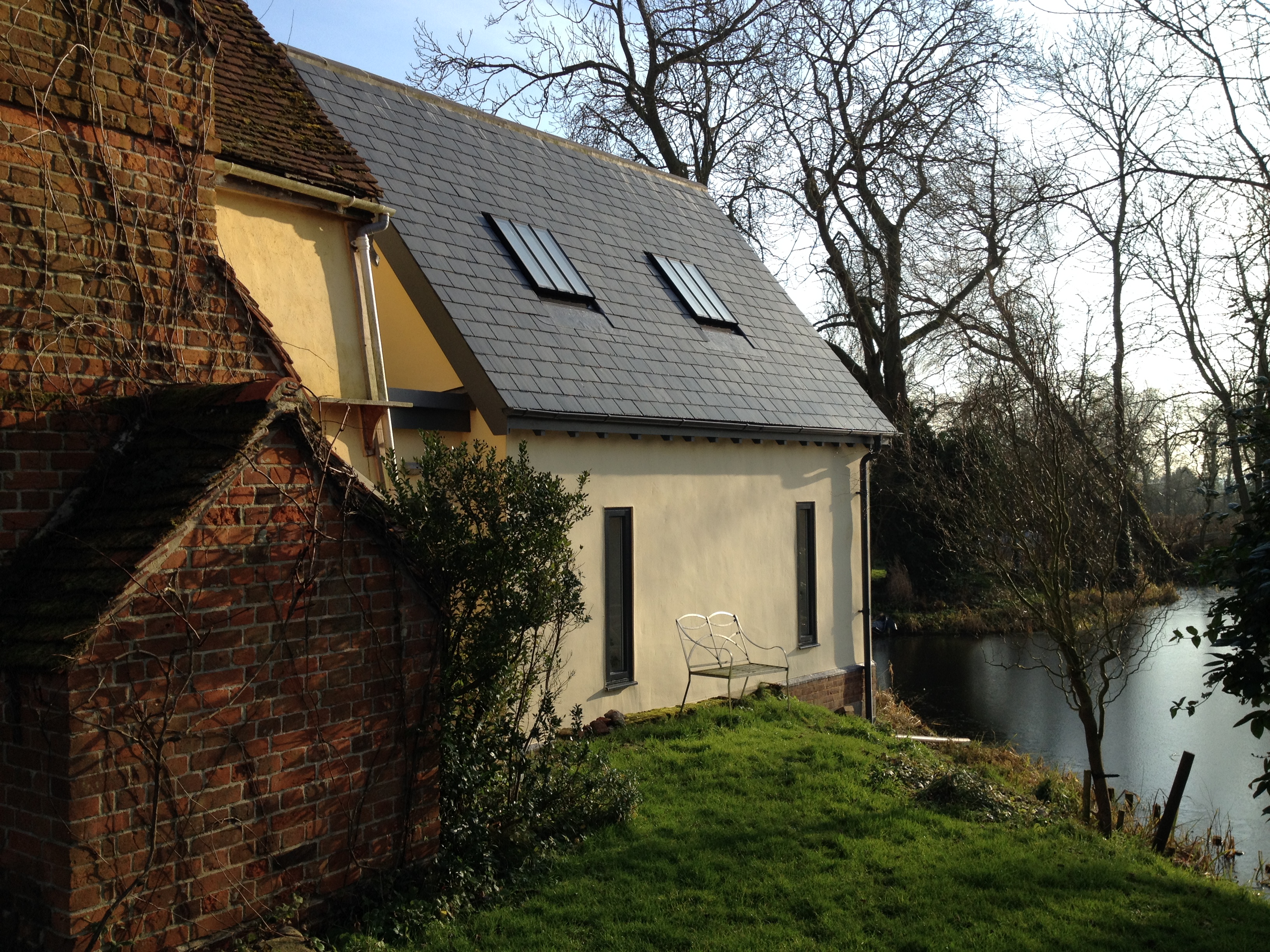
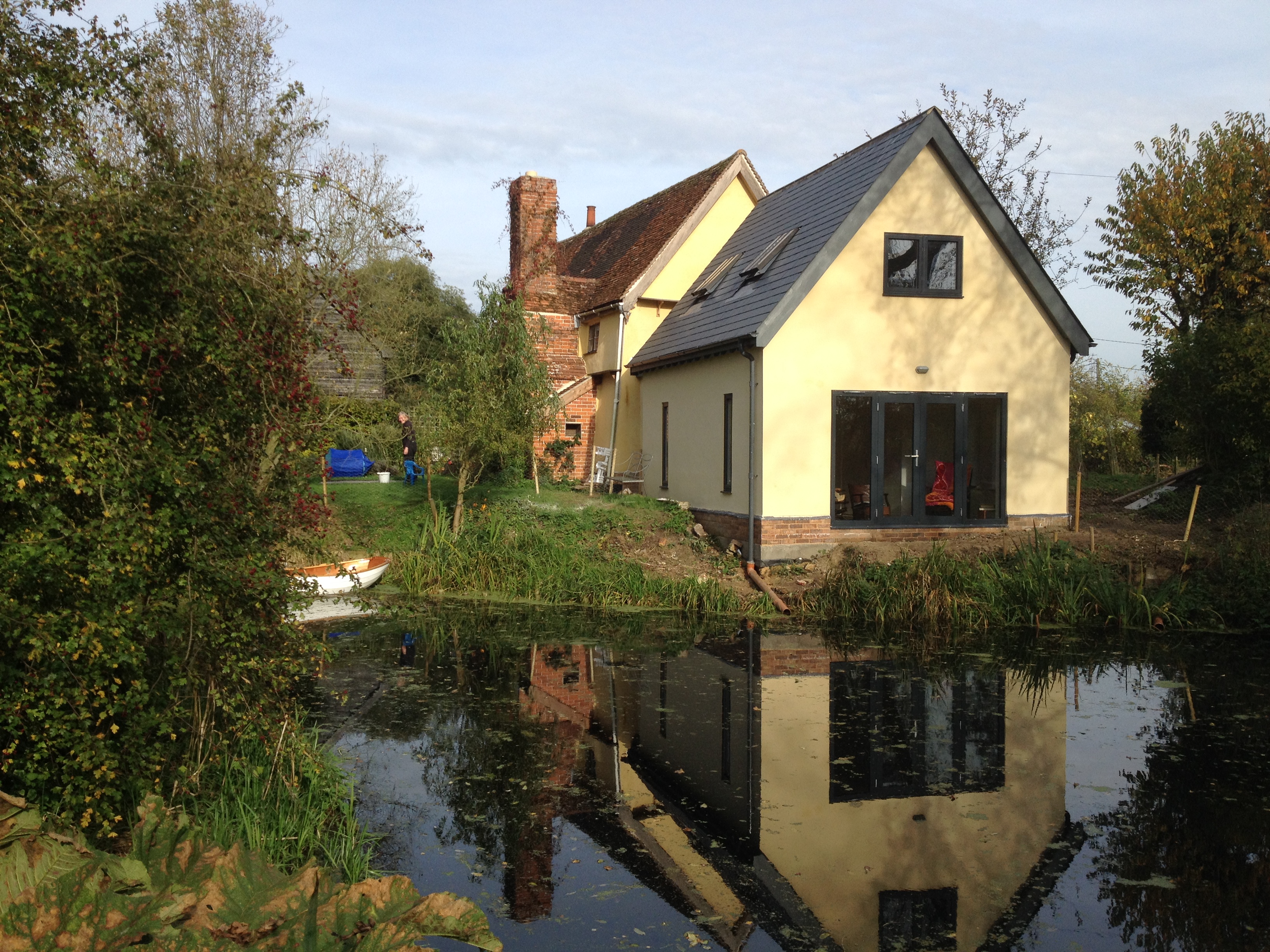
Nearly eight years after buying The Old Brewhouse, and six years after the start of work, we’ve now got the home we imagined when we first came across it in 2007 in a crumbling but idyllic state. There were roses climbing round the doors and windows, ivy smothering the walls and chimney and a lovely but overgrown pond and meadow for a garden.
The roses will soon be back to their former glory, though not the deadly ivy (the quickest way to destroy an old clay wall), Continue reading “The Old Brewhouse saved”
Ready for landscaping

We have nearly completed our seven year project to convert and extend an old farm service building. We’ve made the minimum possible changes to the old building so we can preserve the history of its fabric, including the clay in its walls, while turning it into a comfortable home. Continue reading “Ready for landscaping”
Finished
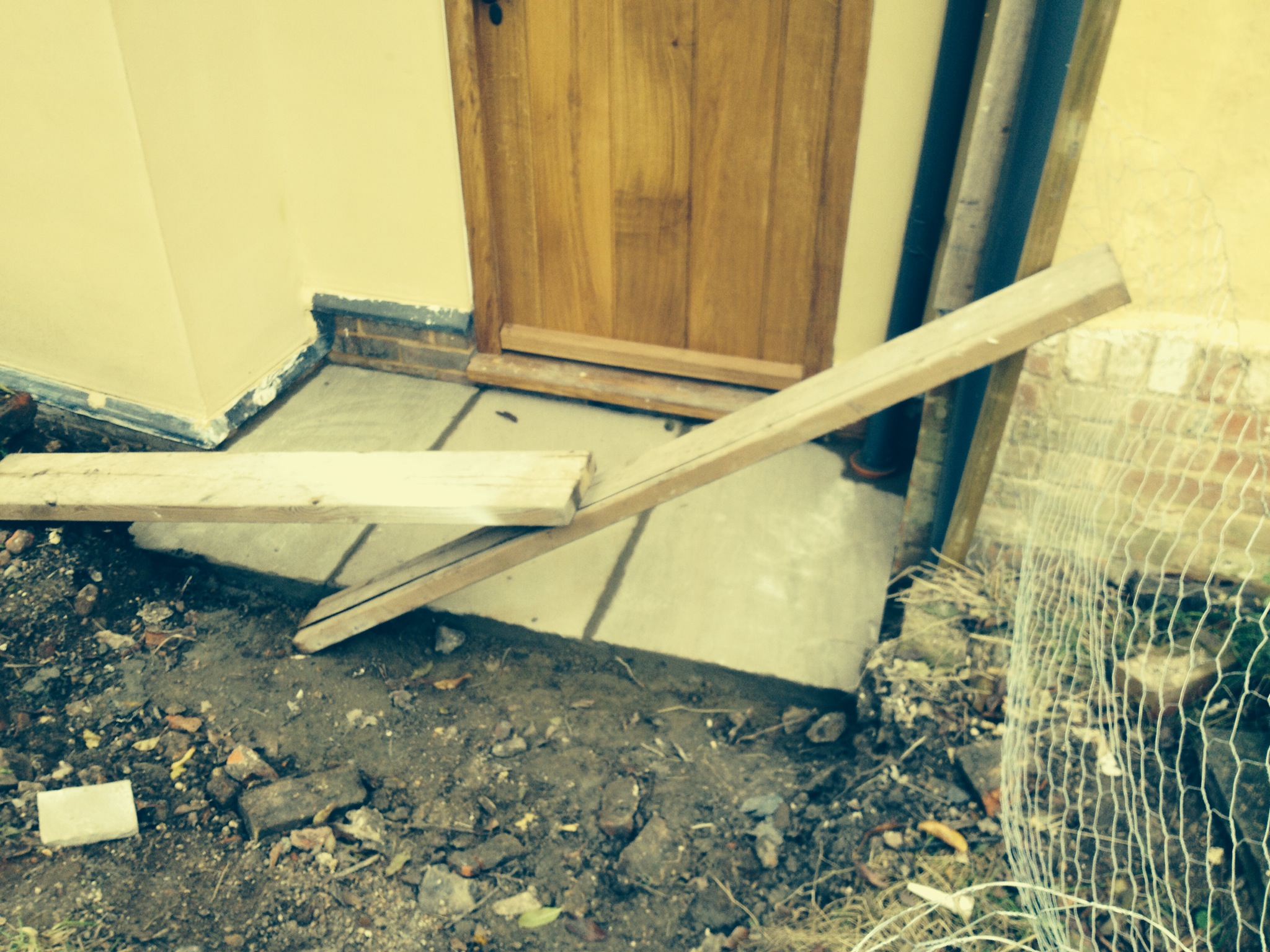
Terry Booty’s last day on site, last job – the front step, below – the debris cleared, except for the last skip awaiting collection. A toast is most certainly required this evening.

Plenty of interesting landscaping yet to come, not to mention plastering the other gable end of the old house and…. no, let’s not think about all that till next year!
Pros and cons of a breathable alternative to limewash – Keim
One of the conditions for listed building consent was that the colour of the extension must match the yellow ochre limewash of the old building, so the simplest way to do that would be to use the same limewash mix again. Hollins, the architects, instead specified Keim in the listed building consent application, a mineral paint which has been on the market for well over 100 years, and was developed in Bavaria as a more durable substitute for limewash. I’d never heard of it before, but a web search shows it is widely known.

Keim is claimed to last 15-20 years at least, and the company says there are some examples 100 years old. Continue reading “Pros and cons of a breathable alternative to limewash – Keim”
Back to tradition – lime plaster
We’re using lime plaster to finish the outside walls. Lime is a fairly recent revival as a building material, and people are re-learning the old trades as they go, so there are still a lot of disagreements about the best way to do things. It’s not yet Lime Wars, but there are regular skirmishes.

As we’ve noted before, the Essex way (as taught on a course we attended near Braintree) was to use lime and sand as a hard render on the outside of a wattle and daub house. We repaired a wall like that, only to be told off a year later by a local Suffolk expert: the true vernacular coating in Suffolk was a plaster made from chalk, hair and lime, which is tougher and more flexible. Continue reading “Back to tradition – lime plaster”
A new roof over our heads

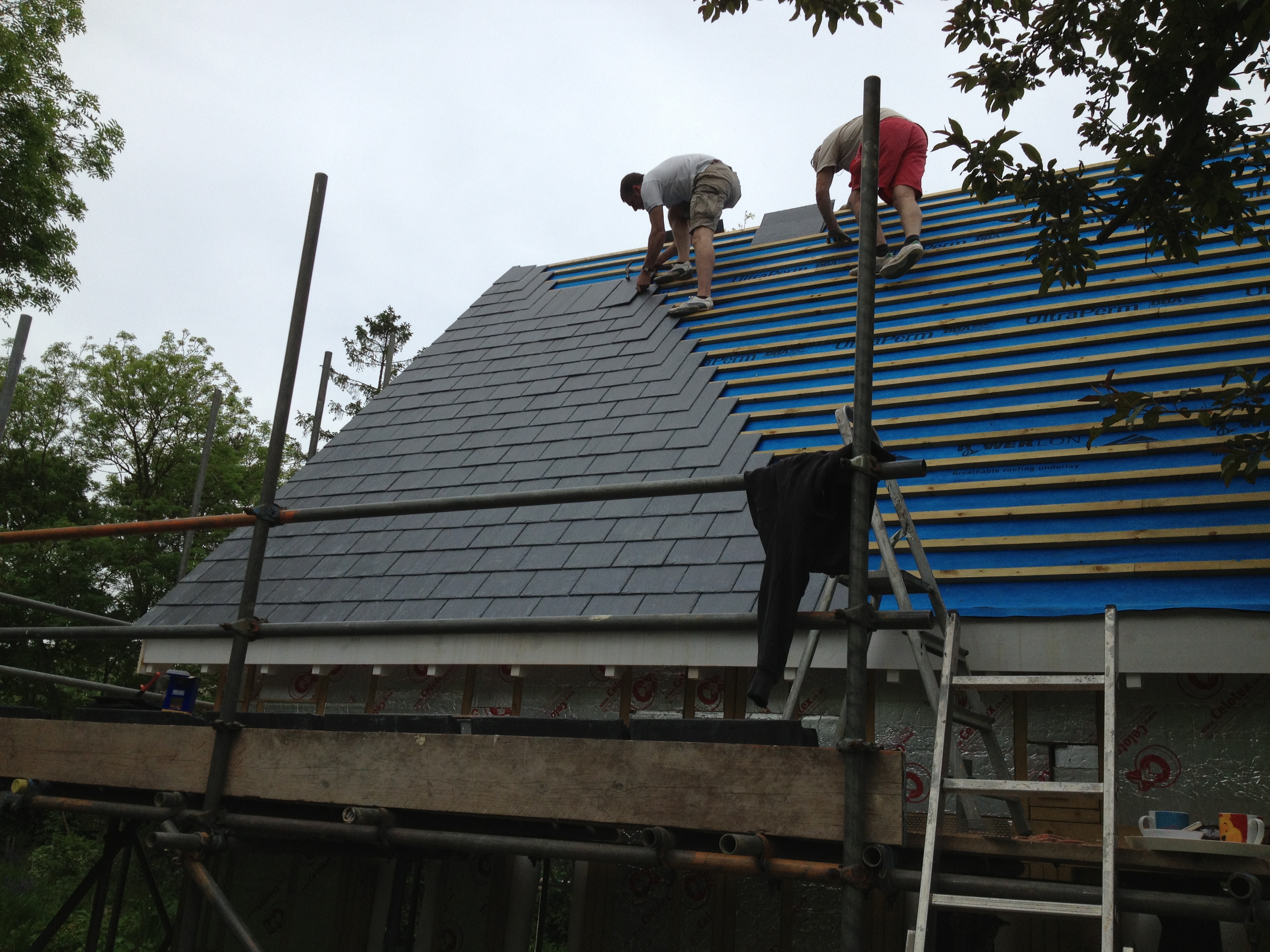
After the frame was finished and most of the insulation installed, there was a delay getting our Canadian slates on site, because the UK supplier had run out of stock. (For an explanation of why they had to come so far, see Continental Drift and the Art of Choosing Slates). Once the slates arrived, the shell of the building was quickly made weathertight, which included fitting the conservation rooflights from The Rooflight Company. These are solidly built, nearly flush and much favoured by conservation officers. Continue reading “A new roof over our heads”