Cracks

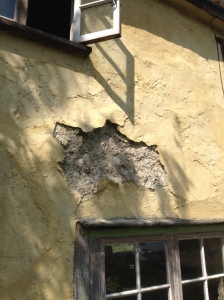
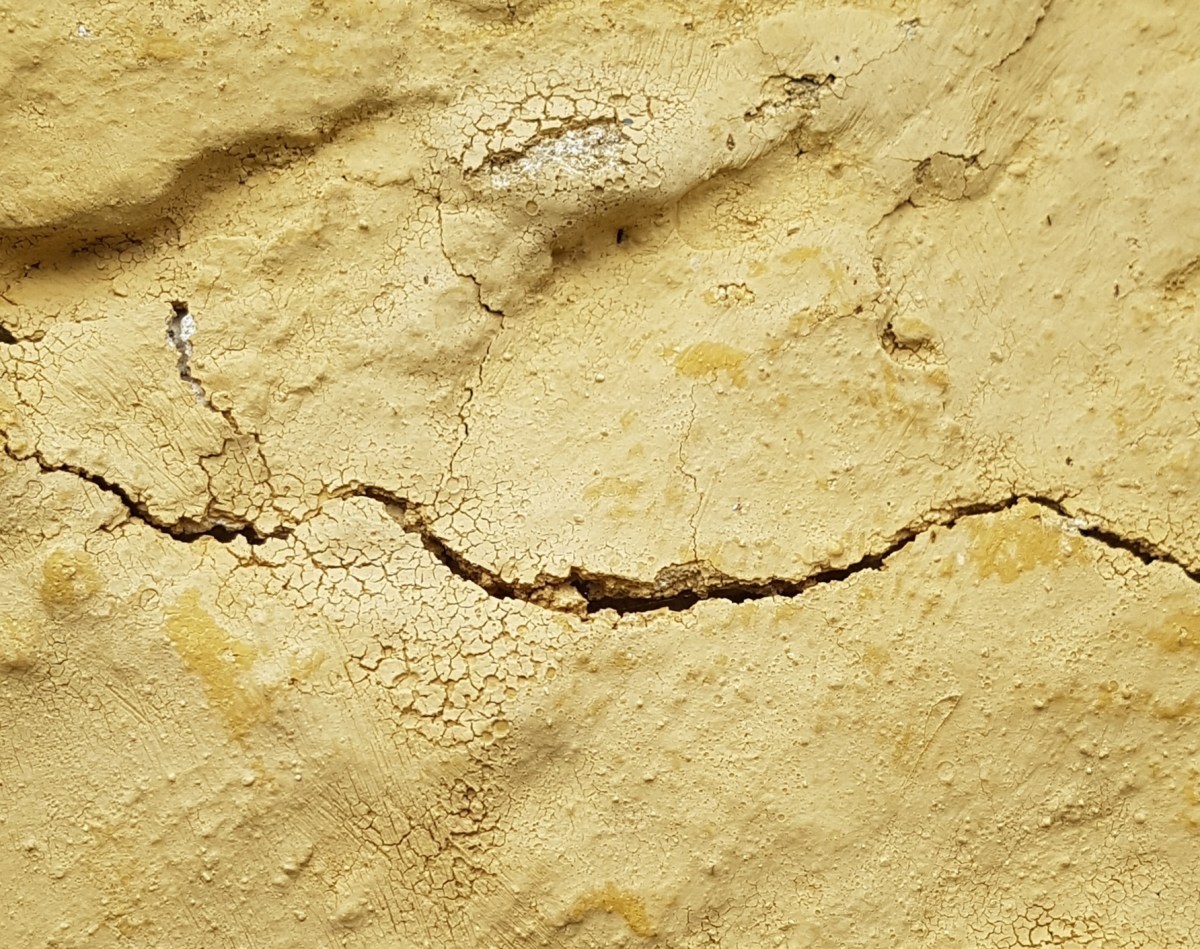
The hot, dry weather has produced many more cracks than usual in our front wall.

20180816_115731.jpg

Much of it is plain clay daub with thick layers of limewash and here and there a smear of recent cement where previous owners had tried to stop the clay falling out. There is no evidence of it ever having been rendered or plastered on laths. Continue reading “Cracks”

Lesser spotted housepeckers

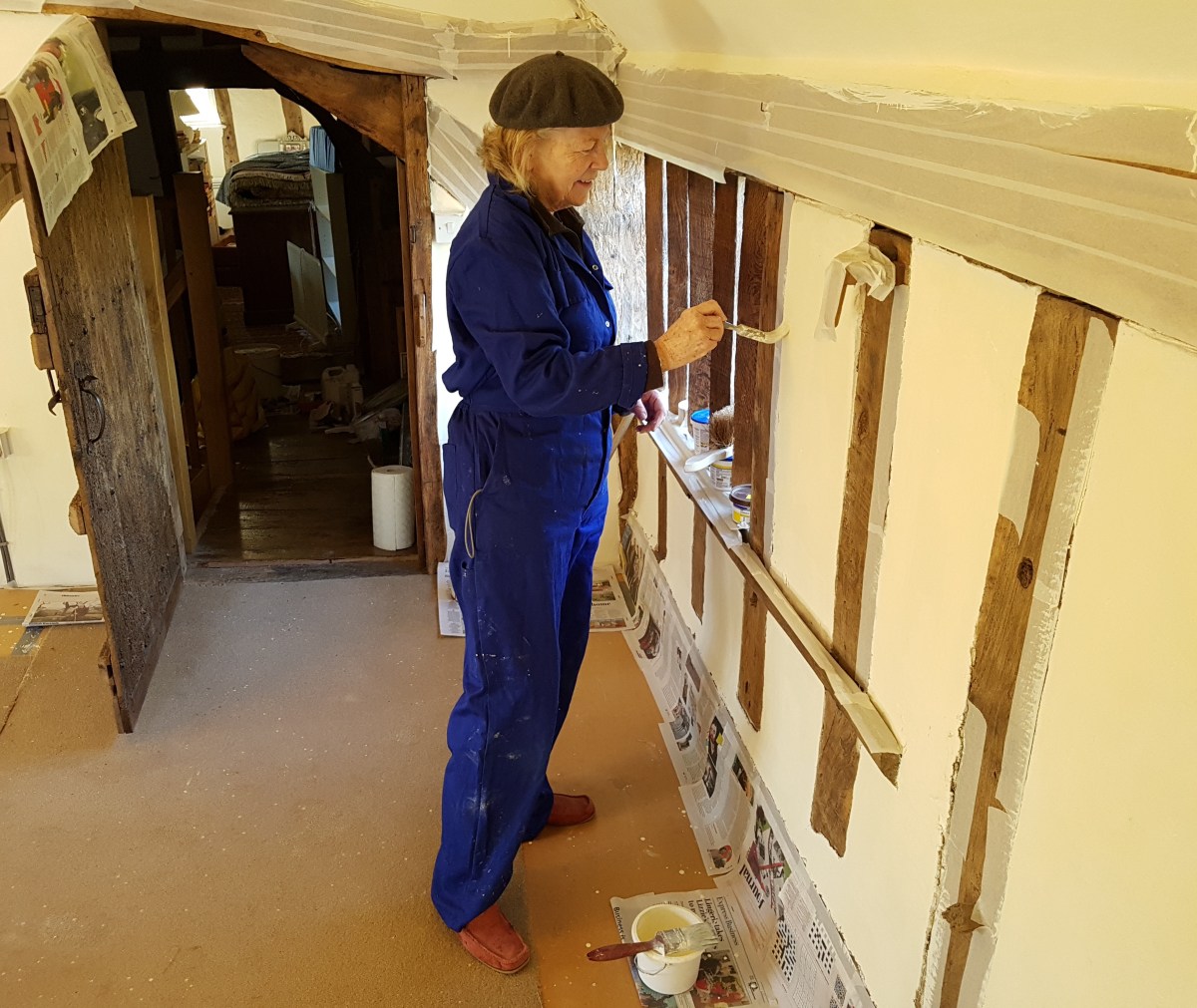
Preparing a room for decorating today, I was filling holes in the lime plaster in a first floor room when I heard a loud knocking on the other side of the wall. I knocked back hard with a trowel handle on the wall but it didn’t stop so I dashed outside to shout at the woodpecker – yet again, they’ve found a way into the clay and they are digging holes for insects, this time too high for anything but scaffolding for repairs.

Lesser-spotted-woodpecker-1.jpg

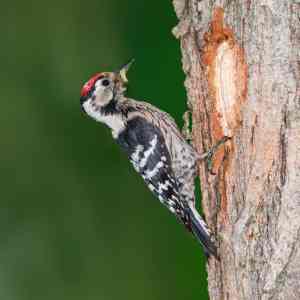
It had gone before I got outside so I am not sure which variety it was – we’ve been attacked by green, greater spotted and lesser spotted (illustrated: one day I’ll be fast enough to get my own photo of a housepecker in the act!) Continue reading “Lesser spotted housepeckers”

Brewhouses, dairies and servants’ quarters

I recently came across an 1874 description of a brewhouse which could almost be about ours. It is by Richard Jefferies*, a Victorian novelist and writer about nature and the countyside. The brewhouse he describes is part of a multi-function farm service building that is also used as a dairy, for cheesemaking and for servants’ accommodation. Evidence we and the previous owners found in the building fits that pattern rather closely. Continue reading “Brewhouses, dairies and servants’ quarters”

Take time to sit back and enjoy

It is now 10 years since we bought this house. I’ve just realised, looking at the blog, that there’s been nothing to report since February.

What a pleasure: there have been 10 years of projects, major and minor, and always a substantial job or two waiting to be done, and this is the first year without one. It is wonderfully pleasant to focus on gardening, or to sit in a comfortable chair to keep a lookout for that swimming grassnake, or be delighted by a dragon or damsel fly, or by a kingfisher or flycatcher. The hours spin by. Continue reading “Take time to sit back and enjoy”

Limewash over emulsion paint 

I’ve been wondering how best to  redecorate a room whose surfaces are finished in old materials – clay and plaster – but which have been painted with modern emulsion. That may be creating a breathability problem.

Very modern emulsions are impermeable to moisture. Cruder basic emulsions have a certain amount of breathability, but it’s hard to tell which it is, looking at the result at least 30 years after it was last painted. So should the emulsion be removed? Continue reading “Limewash over emulsion paint “

Old fashioned paint

It has been a positive pleasure painting the windows in the last few days using custom-mixed linseed oil paint from Ingilby’s of Glemsford. The window frames were stripped and repaired, and much of the putty renewed, some time ago, and they have since been given several coats of pure linseed oil to prepare and waterproof them. But for various reasons, I didn’t get round to completing the job.

Now I’m painting, I can immediately see the benefits of using linseed oil on old wood. Where I’ve left a leading edge of paint on bare wood, the oil spreads out of the paint into the wood, which seems to lap it up, almost pickling the timber in oil. That can only be good for long term preservation, especially as absorption is helped by the slowness with which the paint dries. Continue reading “Old fashioned paint”

Repairing the damage 

The first step is to prepare some of our grey boulder clay, which we saved from the excavations for the extension. It is much better than the brown clay we used previously when we bought ready mixed daub from a farm in Essex.

We pounded the clay lumps with the end of a piece of timber until they became like smooth plasticine. Continue reading “Repairing the damage “

Back to daub

005 (3)
Exposed clay daub

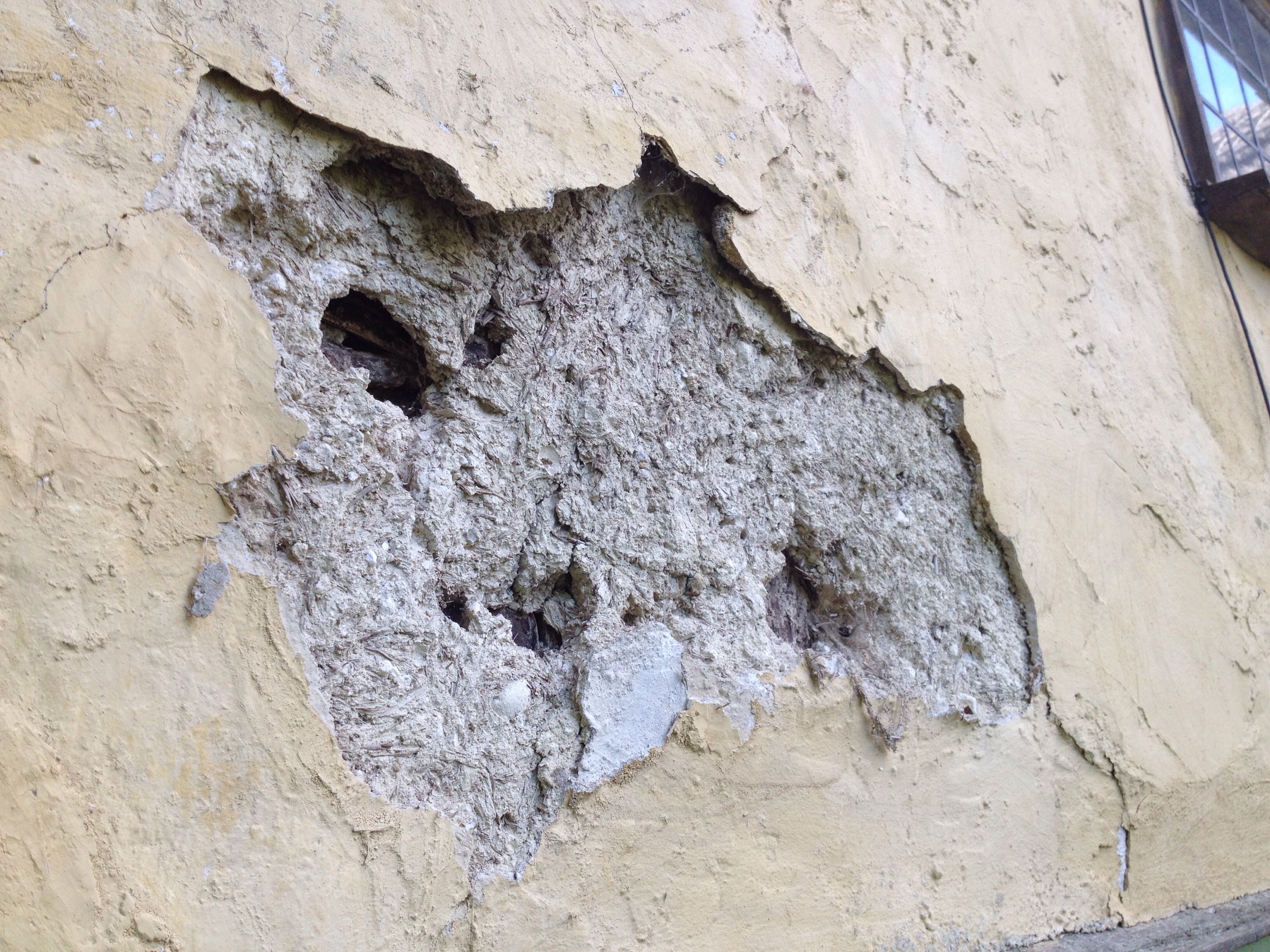
After focusing on  a new timber framed extension for so long, we’re now back to repairing the old building. Weak bits of of a rough cement render have been dropping off  the front wall, as the picture shows. The cement is just a thin layer skimmed a few decades ago onto clay daub.

We’ve been expecting this, but took a decision early on to let it happen by natural weathering, and then patch repair bit by bit.  Looking at the evidence of what’s there, we think patching is the way the walls have been maintained for a very long time – any weakness, then they just slapped on a bit of clay and limewashed it, and owners only recently took to adding cement as well. Continue reading “Back to daub”

How to stop worrying and relax a little

Sometimes it’s quite hard to relax when you live in an old house, because the lazily wandering eye will all too often spot something not quite right: a beam that suddenly seems to have too little support, or a pile of dust that might betray active wood pests. Nine times out of ten the risks spotted in that casual glance prove, on reflection, to be exaggerated, perhaps a function of the pessimistic frame of mind that develops when repairing an old house: the deeper you examine the building, the more problems you have to solve. Here are pictures of three things we did after staring rather a lot at potential problems. Probably only one of them was really necessary, but doing the other two made us feel better.

IMG_3335
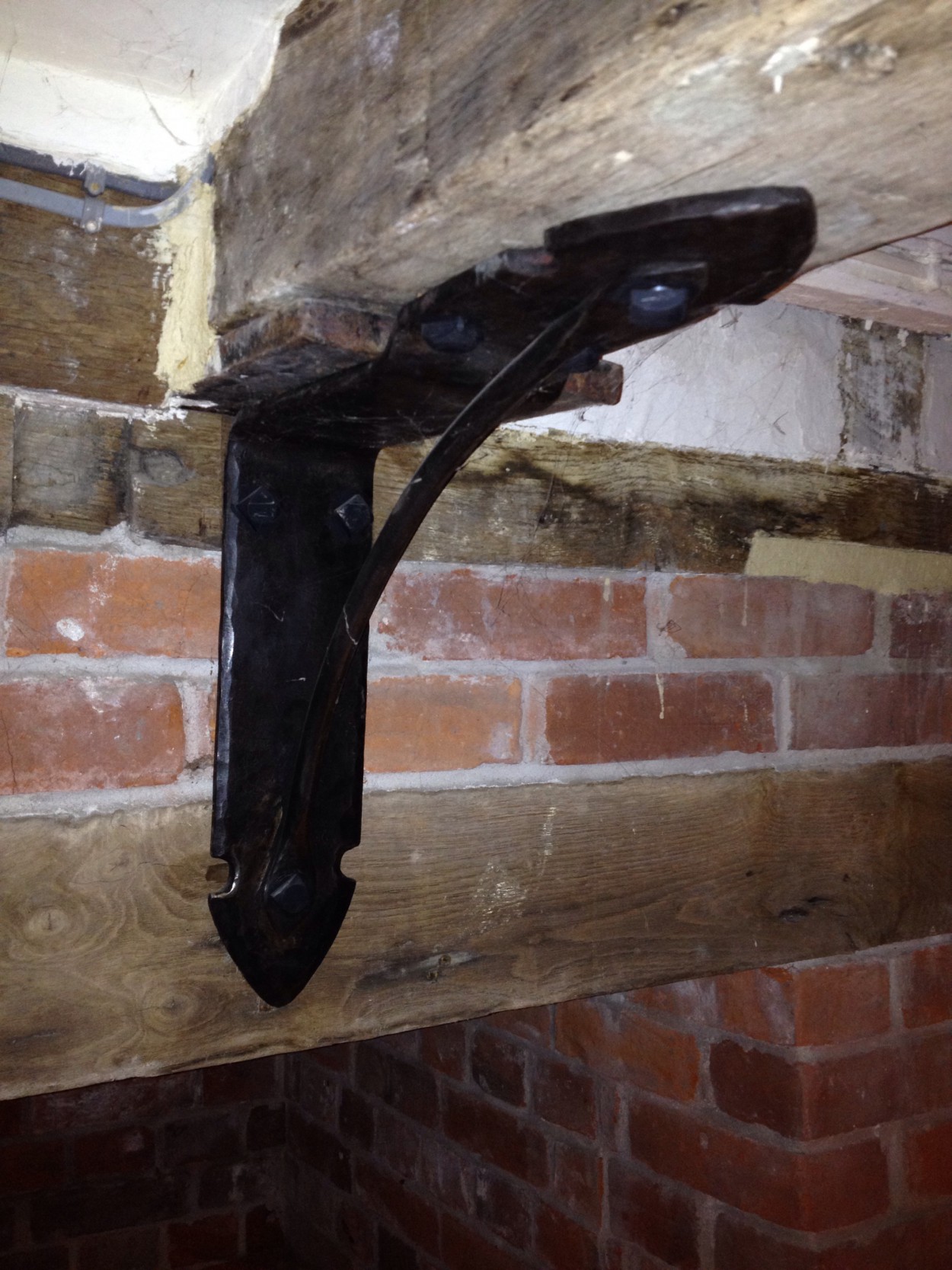
Wrought iron bracket

The first picture is of a wrought iron bracket we had made to reinforce the end of the biggest beam in the house, which does not quite meet the wall (a result of the repair of the chimney and fireplace which were leaning into the room but are now straight, which moved the bearing surface in the wall away from the timber). The beam end since then has rested not on a post but on a one inch thick steel slab inserted in the wall whose other end bears the weight of a beam and studs above. Solid and permanent, we were assured, but sitting in an armchair underneath, somehow it didn’t look right. The bracket bought piece of mind, and looks nice, too. Continue reading “How to stop worrying and relax a little”

PS on lime

I gather that there is questioning among some East Anglian lime specialists of the claim reported in the previous post that traditional hair mixes are significantly prone to failure.

As I mentioned, this is not about the well known deterioration of hair if it is left too long in a wet mix before being used, but about intrinsic faults in the hair, especially if it is imported. Continue reading “PS on lime”

Lime developments

I have to admit now that I have been a bit nervous about our new chalk lime plaster since last August, though I haven’t confessed it so far to the blog: we used imported pigs hair for the plaster in 2013, and more than a year after it was done I was speaking to another lime specialist who gave a deep intake of breath, frowned, and asked: has it fallen off yet? He seemed to relish recounting the story of another Suffolk house where the pig hair had disintegrated and the plaster coat had failed in the first year, on his version of the story because it had a foreign bug that had eaten it.

I’m now much more confident that our pig hair plaster is OK. There are no signs of failure, and from time to time over the autumn I pulled out a bit of hair near the surface and checked it for strength. I tried again this morning and the hair was as strong as ever. Continue reading “Lime developments”

Archaeologists find an ancient invoice

A rather large invoice has just arrived for work by Suffolk County Council archaeologists six years ago. It was a condition of planning permission that we paid for an archaeology report.

They established that we owned what had once been a brewhouse, and among other things they painstakingly troweled through layers of soil and took away bricks from the Brewhouse hearth to date them. Interested to learn as much as possible about the building, we chased their report a number of times over the following year, were twice promised it but nothing arrived, and we eventually gave up and forgot about it.

Then out of the blue an invoice for more than £4,500 landed in the postbox, and still no archaeology report. Six years before we would not have grumbled, because we had set aside the cash and would have liked to find out more about the building’s history, but after this length of time it’s a blow. When we pointed out that there was still no report, the council withdrew the invoice, and said the report would be available within the next two months. It wasn’t after two months, four months …. we wrote again, but no response. They must have lost all the paperwork. After six years going on seven, I really don’t think they can legally revive that invoice.
The Old Brewhouse saved

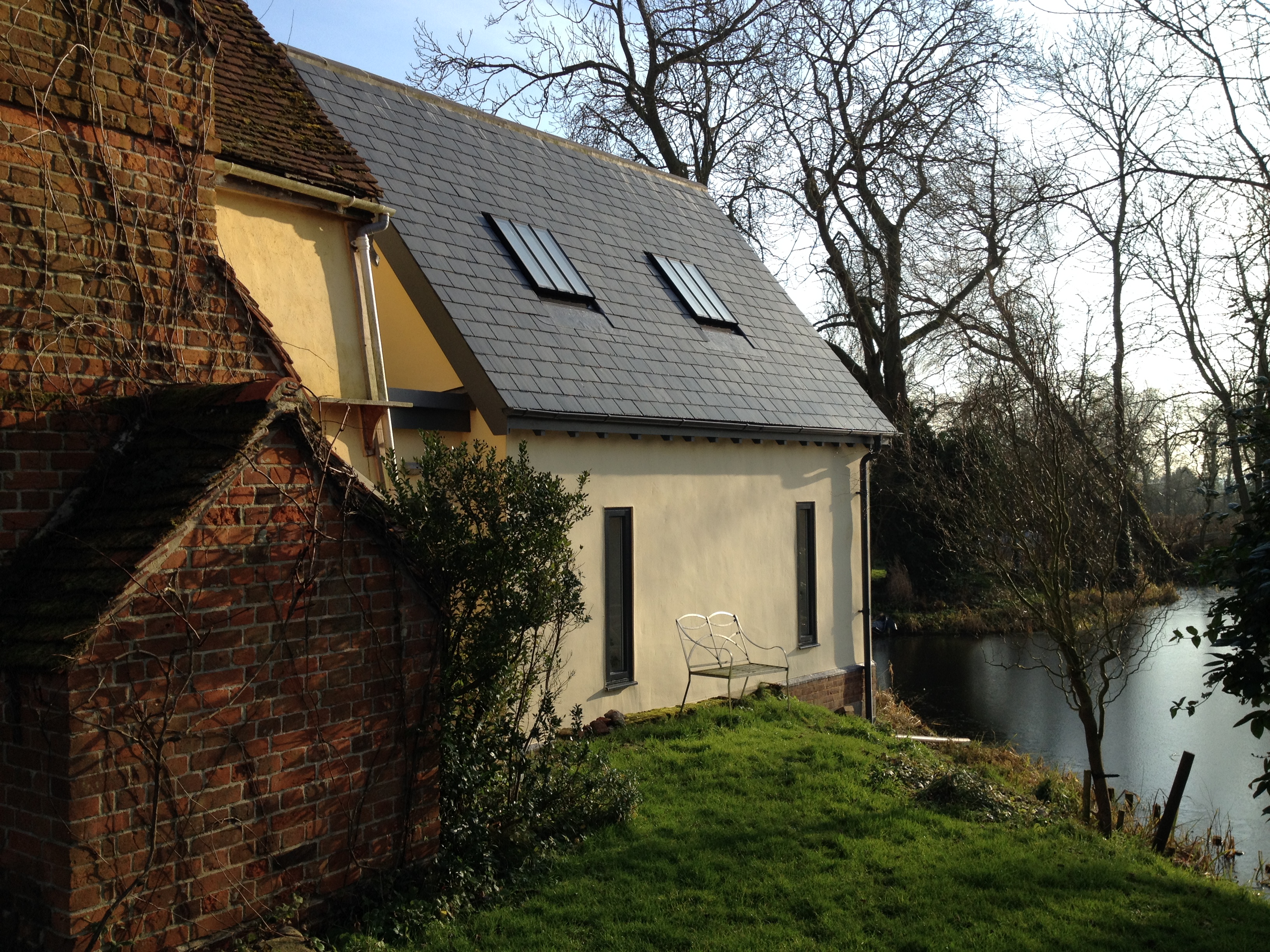
Nearly eight years after buying The Old Brewhouse, and six years after the start of work, we’ve now got the home we imagined when we first came across it in 2007 in a crumbling but idyllic state. There were roses climbing round the doors and windows, ivy smothering the walls and chimney and a lovely but overgrown pond and meadow for a garden.096

The roses will soon be back to their former glory, though not the deadly ivy (the quickest way to destroy an old clay wall), Continue reading “The Old Brewhouse saved”