The chimney

These are the first images we have come across of the rebuilding of the old chimney, which was collapsing. The new chimney at the back of the house is a largely exact copy of the old, though it uses modern bricks. Above is the rear of the building after clearing away the debris and digging new foundations.
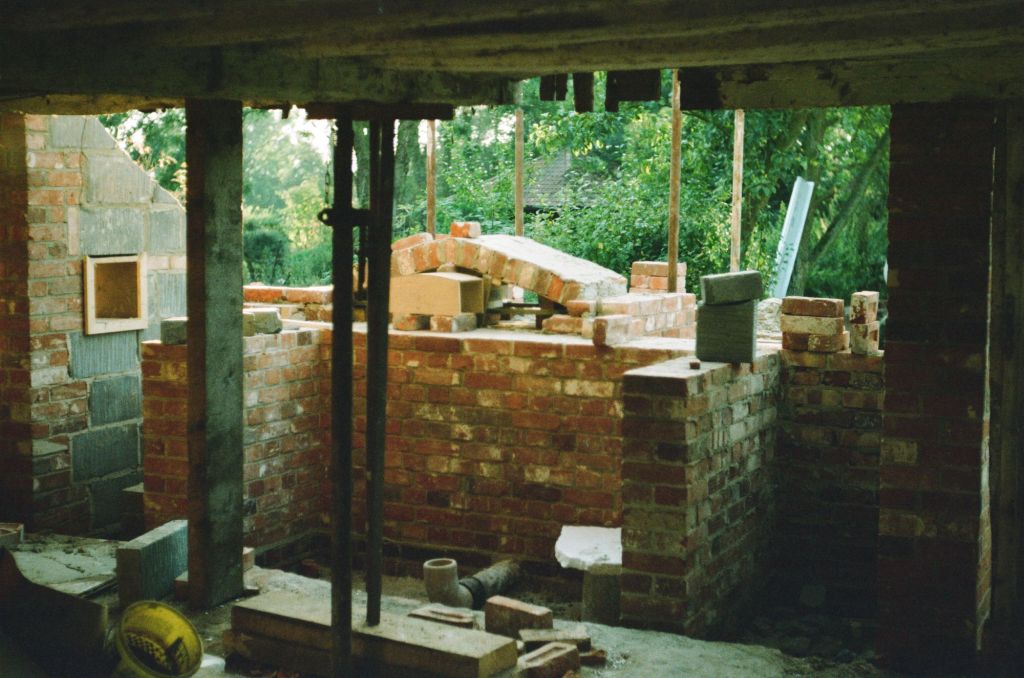
The other departure from the original chimney is the shape of the baking oven. Paul told us a few years ago that he had complained that the brick arch of the oven (seen here from the inside, part way through construction) did not copy the original accurately.
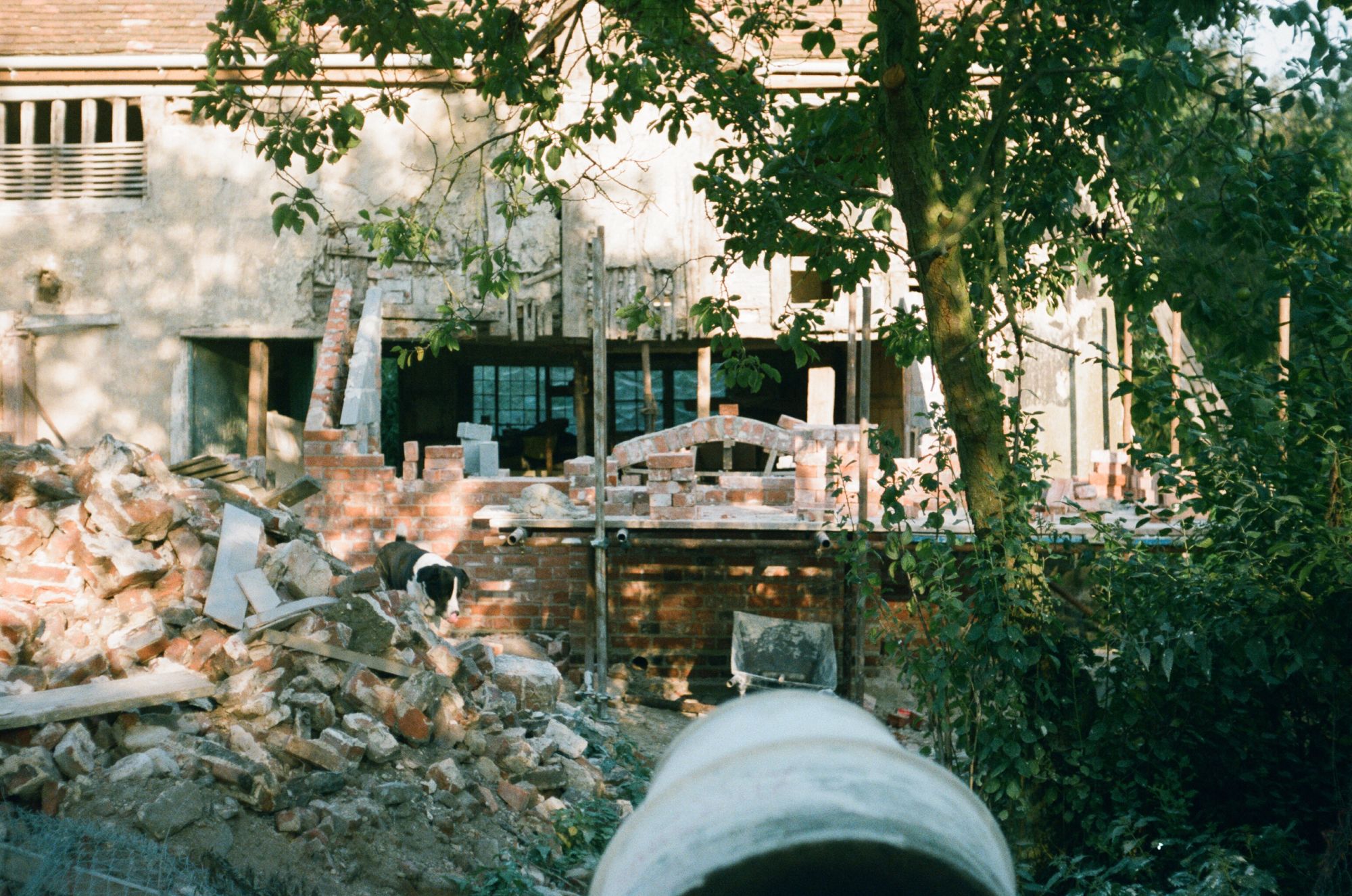
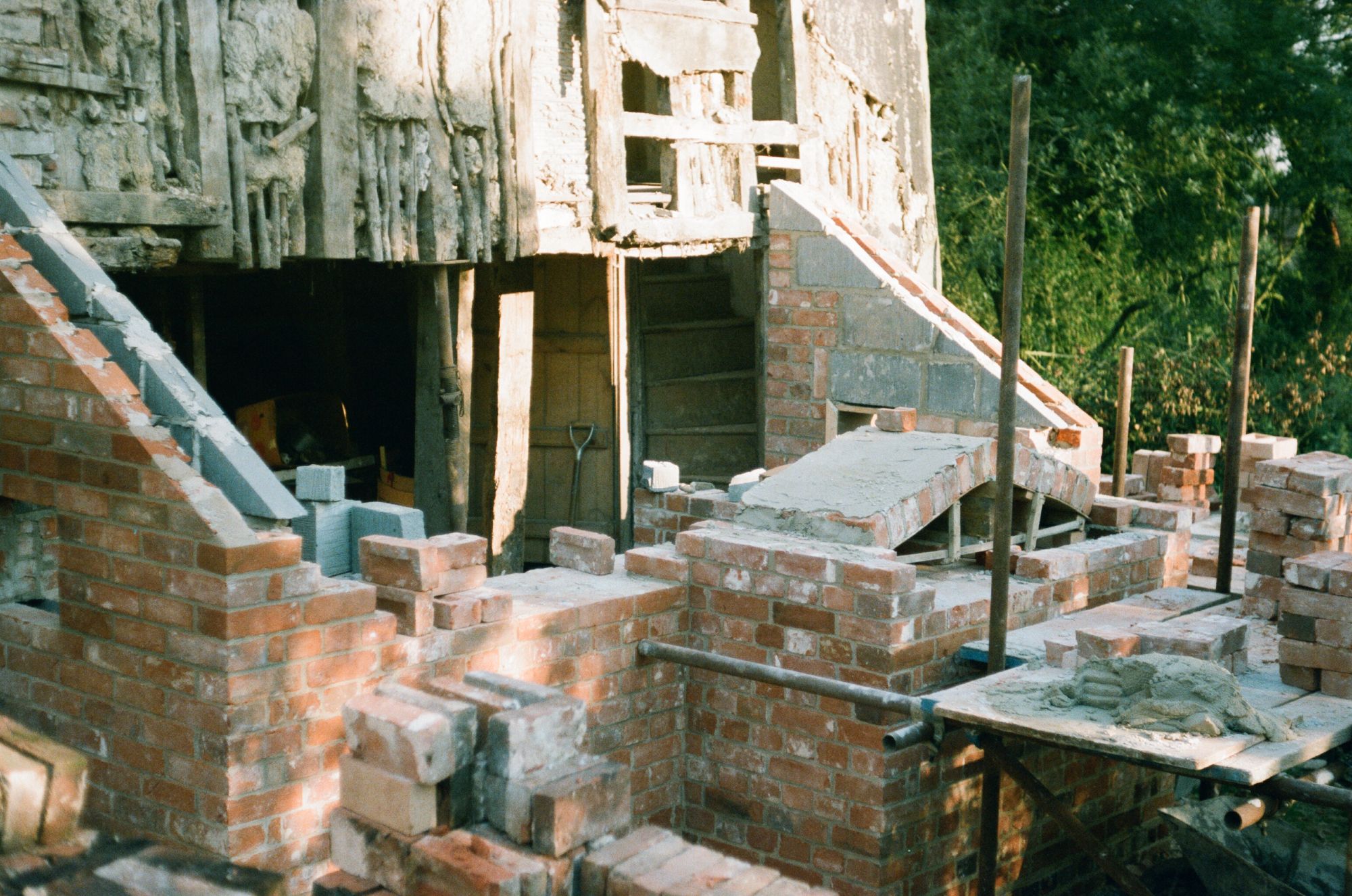
The photo above shows that the new structure has a cavity wall construction with blocks on the inside and brick on the outside – a very different method from the original, but building control probably insisted. The old wattle and daub wall, from before the earlier chimney was built, is visible. Chimneys were usually later additions to small domestic buildings of the 16th century.
The little spiral staircase that Paul removed is visible on the right of the room inside. It has a door, seen open. Also visible on the left near the top of the sloping blockwork is a beam in which we have found the upper diamond slots of a former mullion window frame. The window may have been removed when the original chimney was built.
Uncovering ancient windows
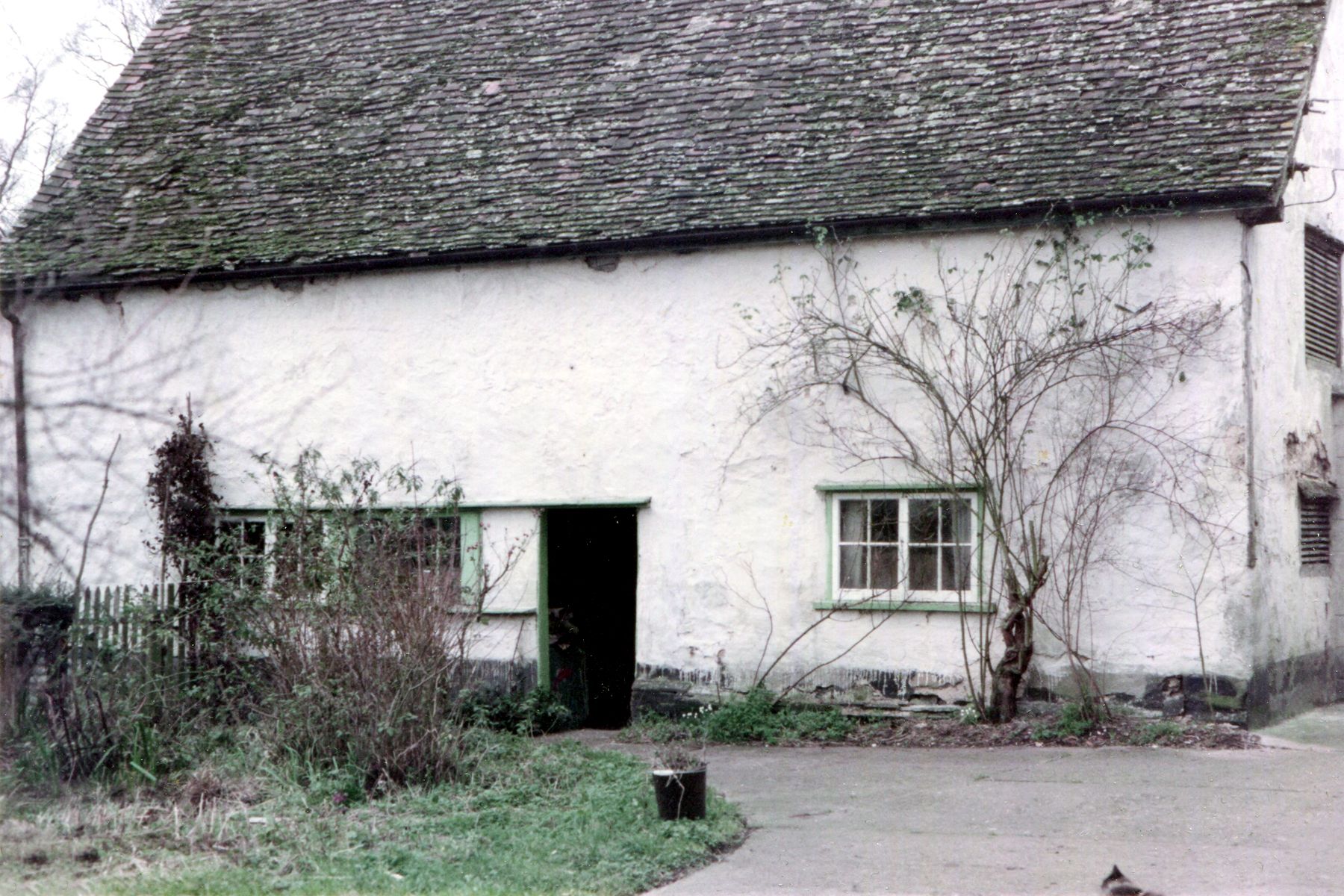
We are lucky to have eight oak mullion windows that may well date from the earliest days of the house in the 16th century, plus traces of two others. The photo above shows that at some stage at least two were wholly or partially covered up, probably with lath and plaster. Paul cut that away to reveal the mullions.
There’s no sign in the photo above of a casement window, which today is a few feet above the left-hand side of the long ground floor window. It’s not clear whether Paul made the opening or put a new casement in an existing hidden frame.
There are two other small windows in the same room. One was inserted into the top half of a doorway on the south wall of the upper floor. The door led to the part of the building that collapsed, and was taken out and re-used as a bedroom door. The rest of the opening was filled with blocks. Investigation of the oak around the third window on the west side may settle whether that was an original opening.
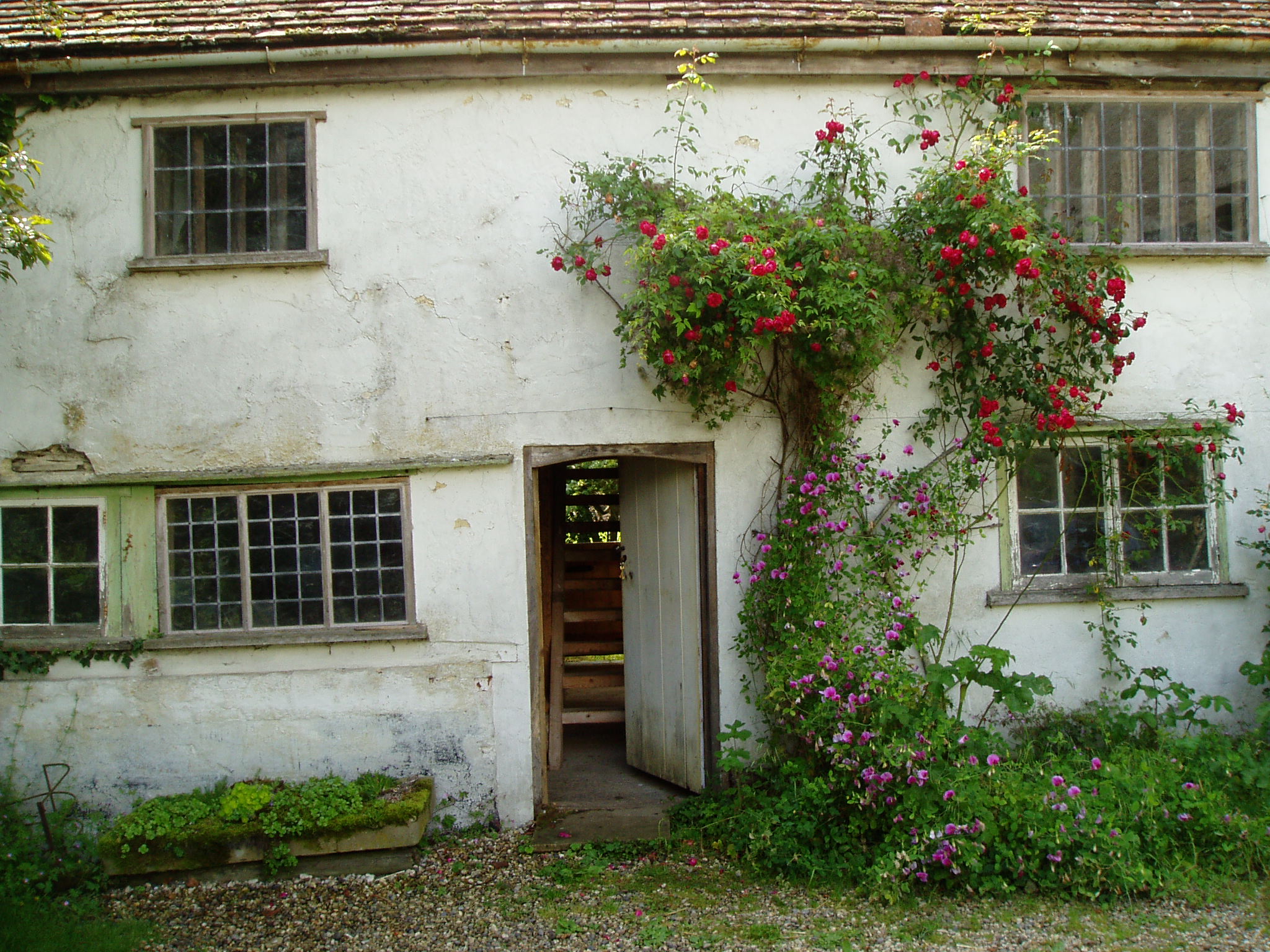
Paul made new glass windows to mount on the outsides of the mullions. To do that, he first taught himself how to make leaded glass. His beautifully-made external windows were mounted on new frames fixed to the old oak window timbers.
It looks as if the windows on the north wall – just showing on the right-hand side of the photo above – had not been blocked up, though there’s a lean-to extension covering part of one (see photo at the end of this post). It is also probable that the two mullion windows on the west side were not blocked: Paul added a tiny window on that side to bring light into a dark space on the first floor.
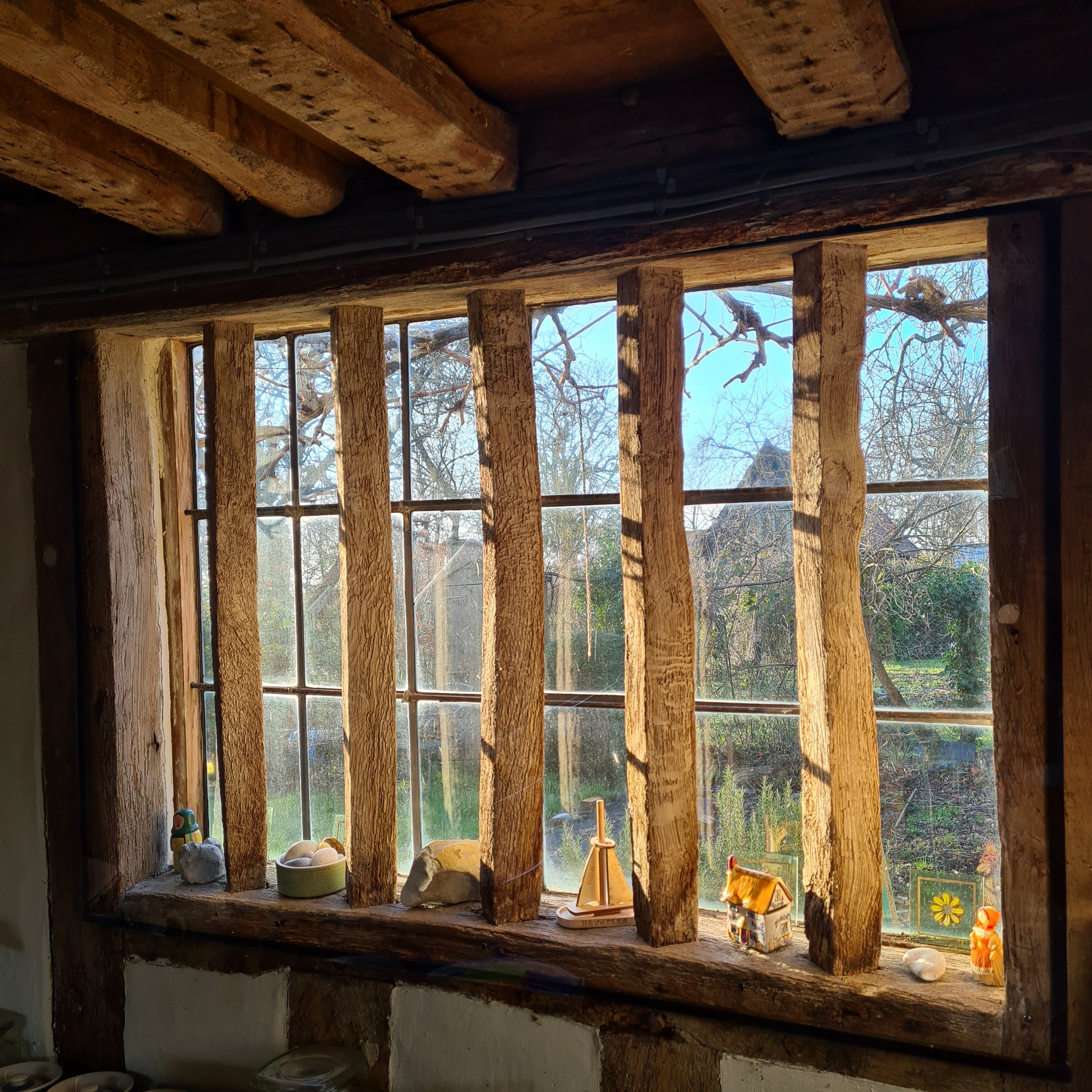
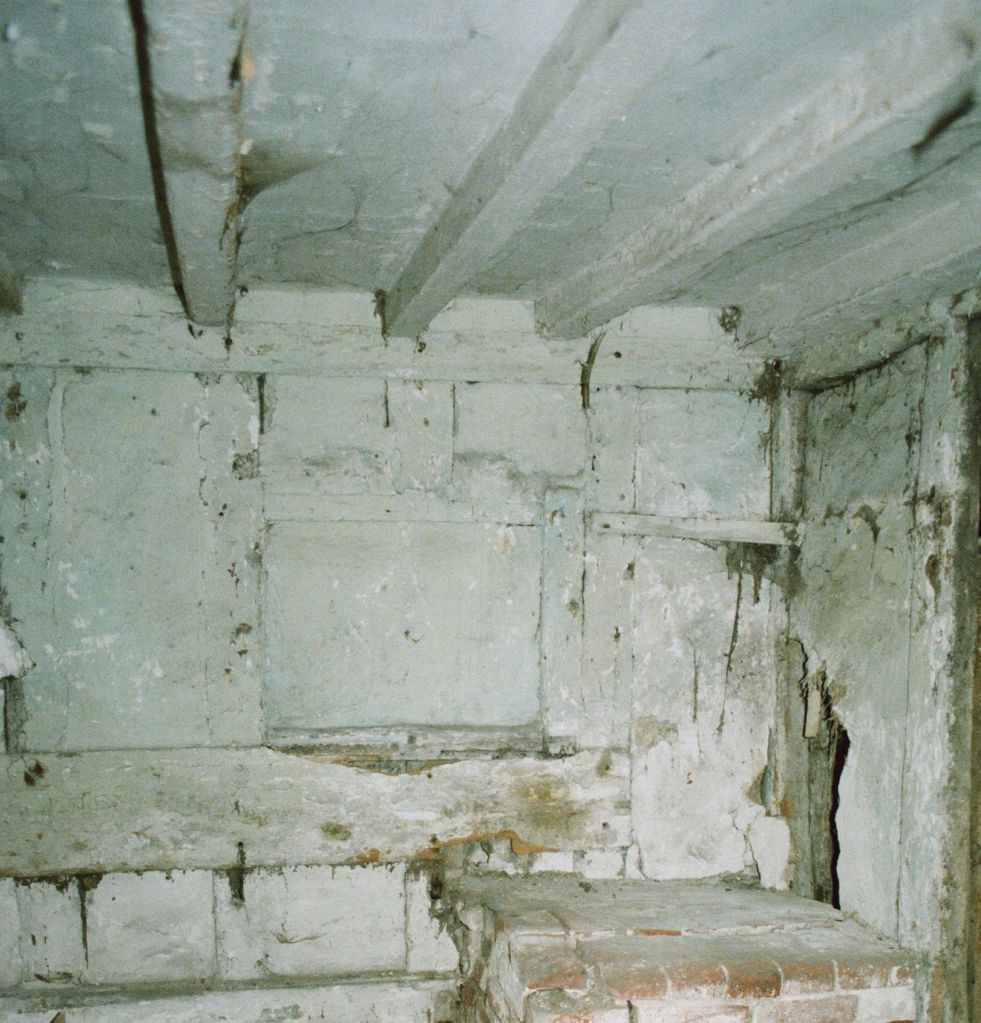
There are two other blocked up windows – the one in the photo above and another on the east wall of the kitchen that still has its mullions showing on the inside.
Brick-built corner hearth
Below is a hearth which may have been for a copper to heat water, in the corner of the space where our living room now is. Usually, a copper would sit in a large round hole on the top – perhaps that was filled in to make a shelf. So the hearth may be for some other practical reason related to dairying, the building’s last use when the farm was working.
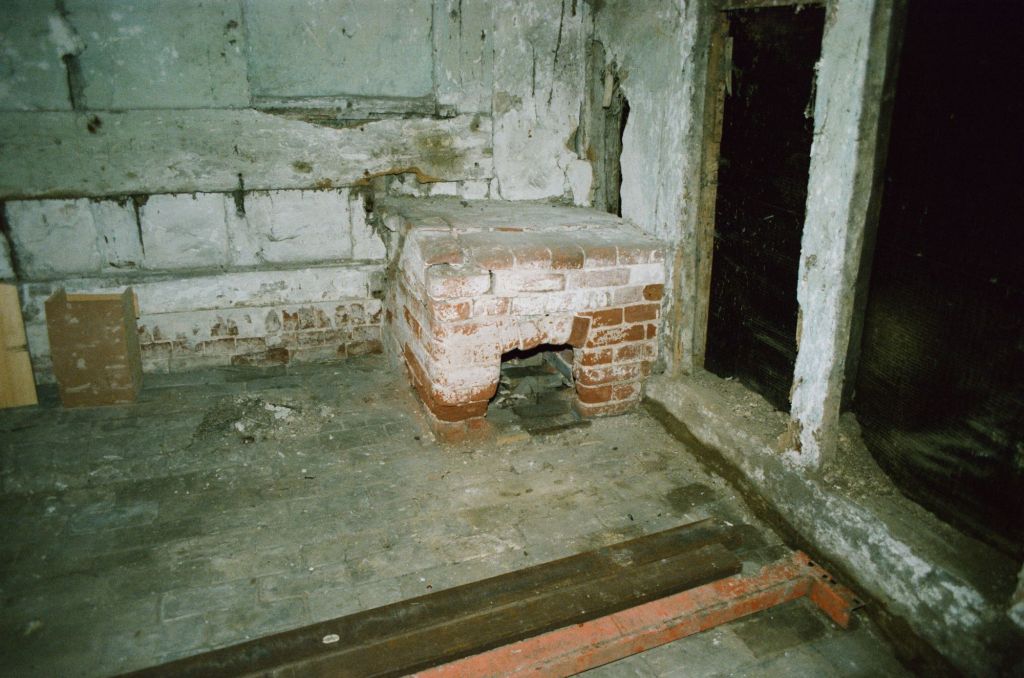
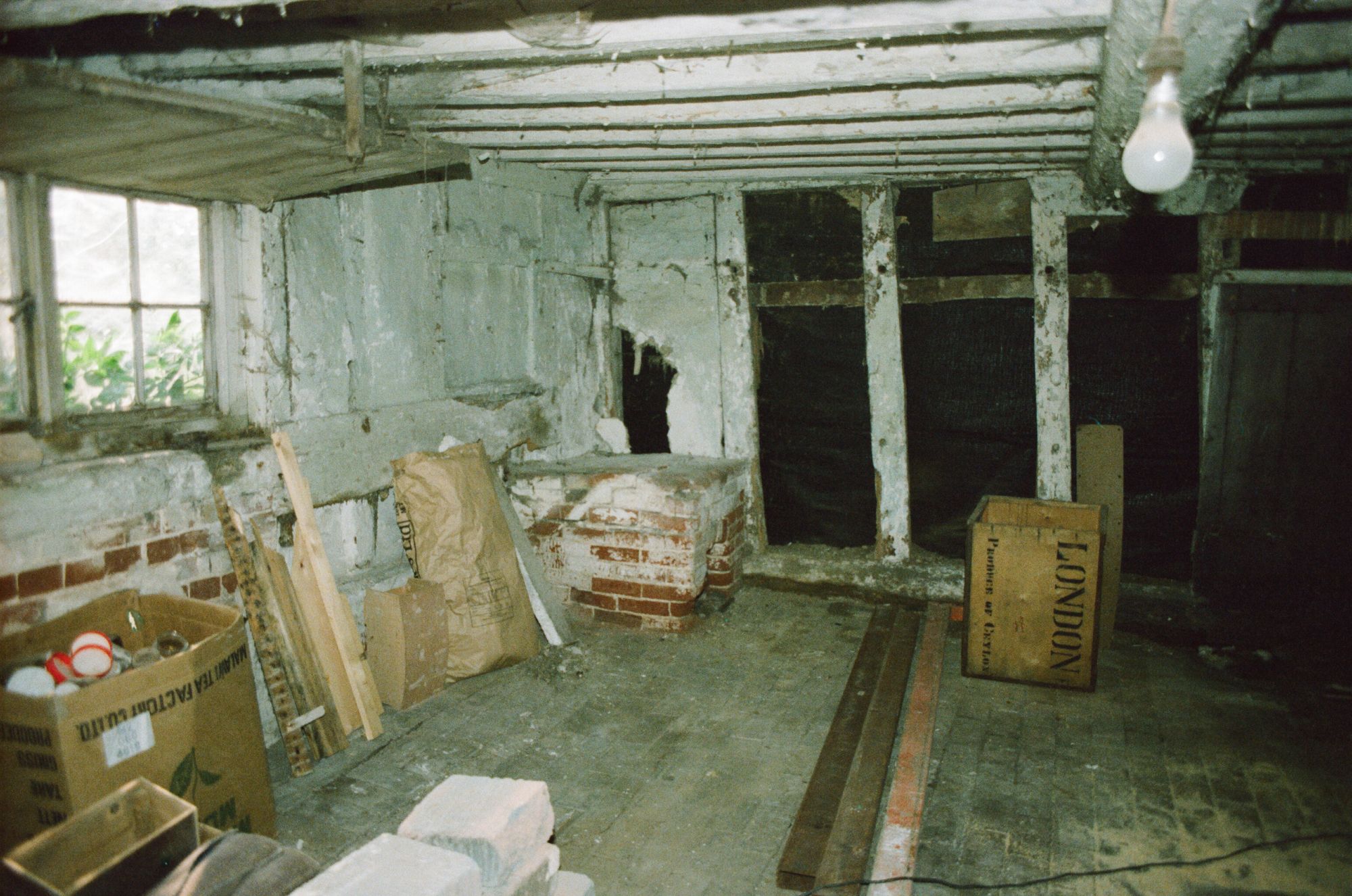
This longer view of this hearth shows some other features. The window on the left, probably 19th century, still exists, but the large shutter over it has gone. It seems to open upwards toward the rafters. Note also the fine brick floor.
The studs at the end once divided this room from the next section of the building which by then had collapsed. Between the studs, black plastic covers the inside of the concrete render that protected the newly exposed internal wall. The rafters must have been in worse condition than they looked, because Paul replaced them with new oak.
The brewing hearth
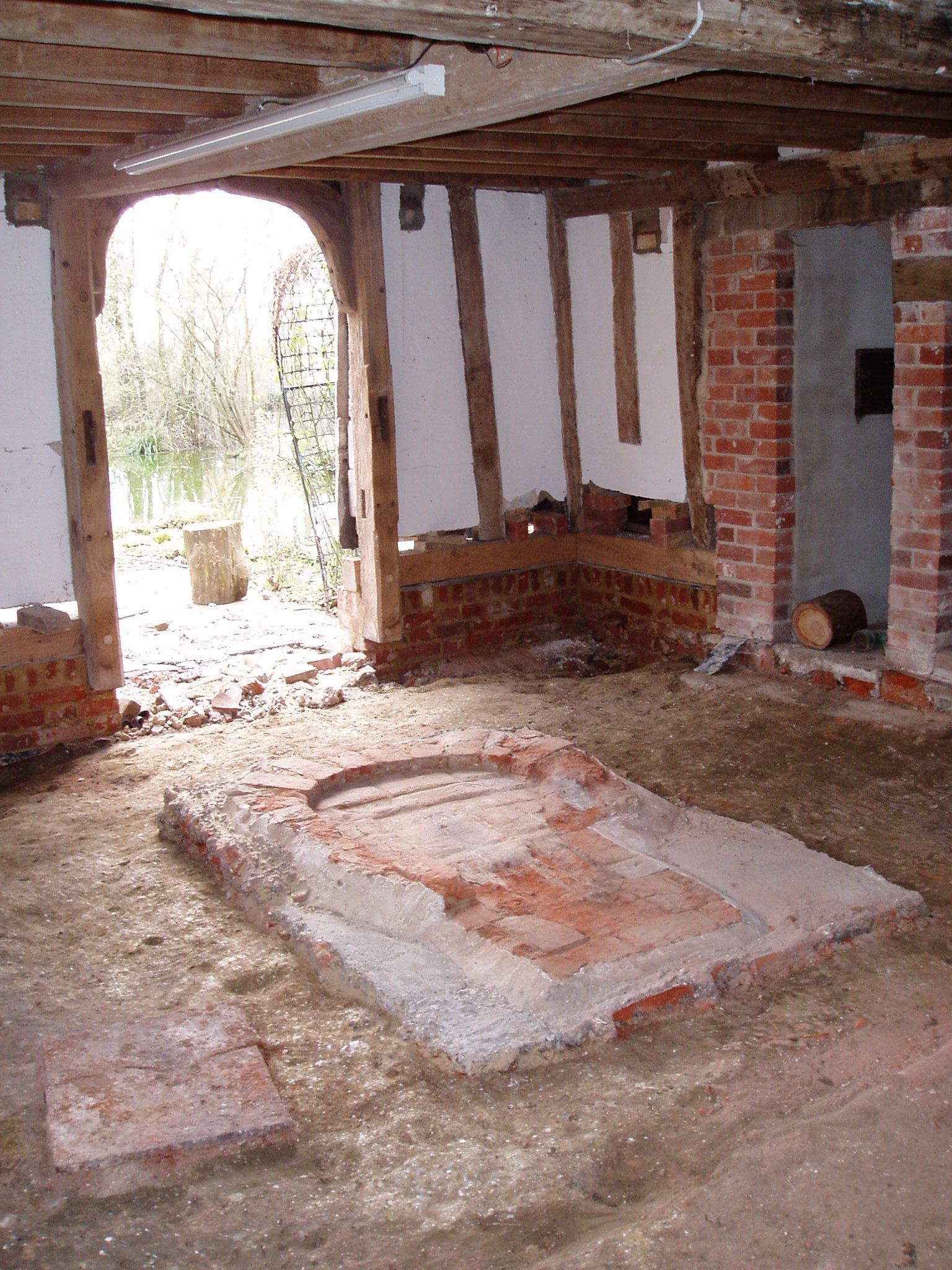
Below are the most interesting discoveries by Paul, one of which was identified a couple of decades later by archaeologists as a brewing hearth.

After the chimney was rebuilt, Paul removed the old brick floor to replace it with cement, and brick circles began to emerge. The round brick structure above is still a bit of a mystery. The top of a well, filled in when the present one was built outside, a few yards away?
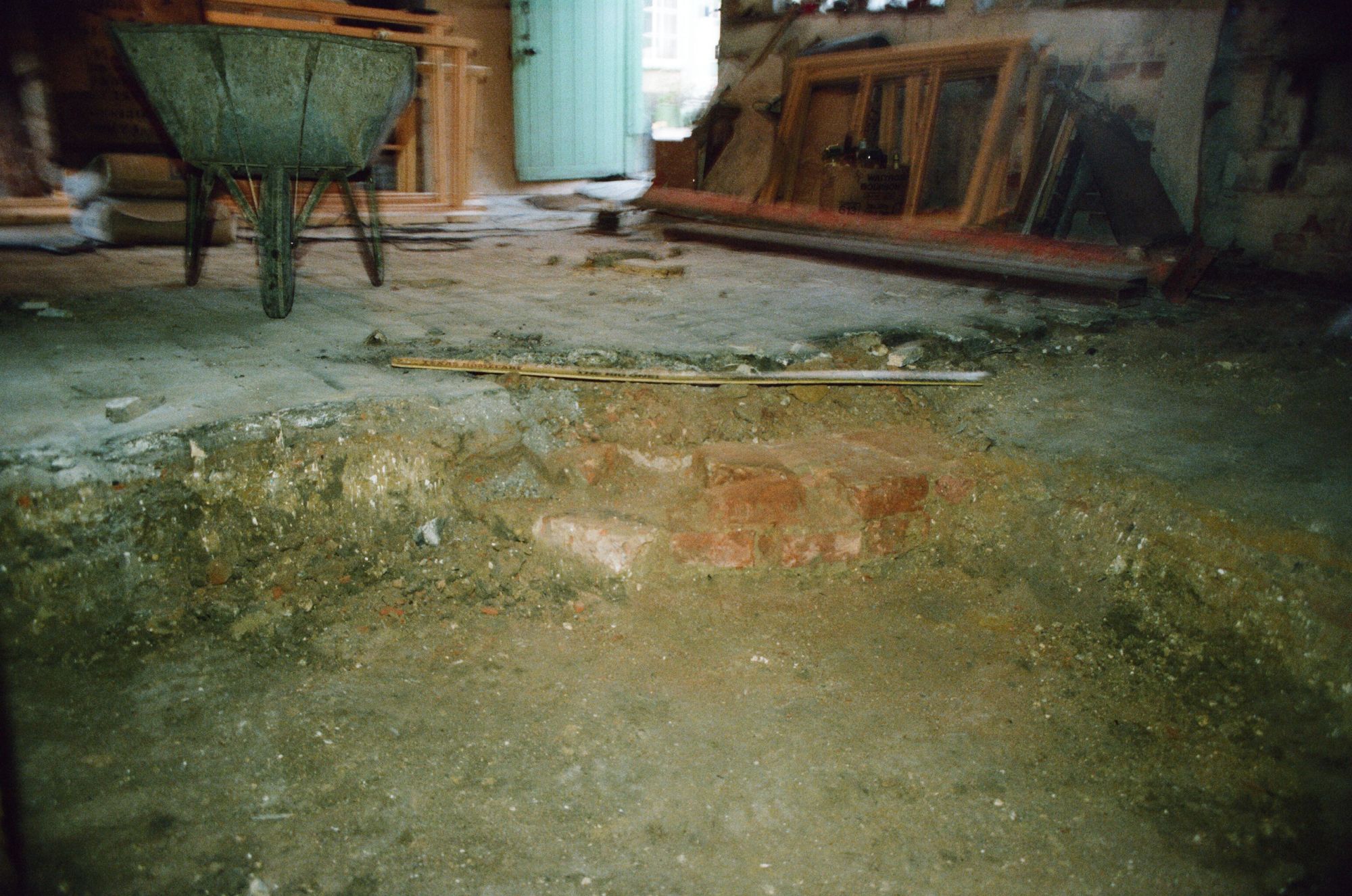
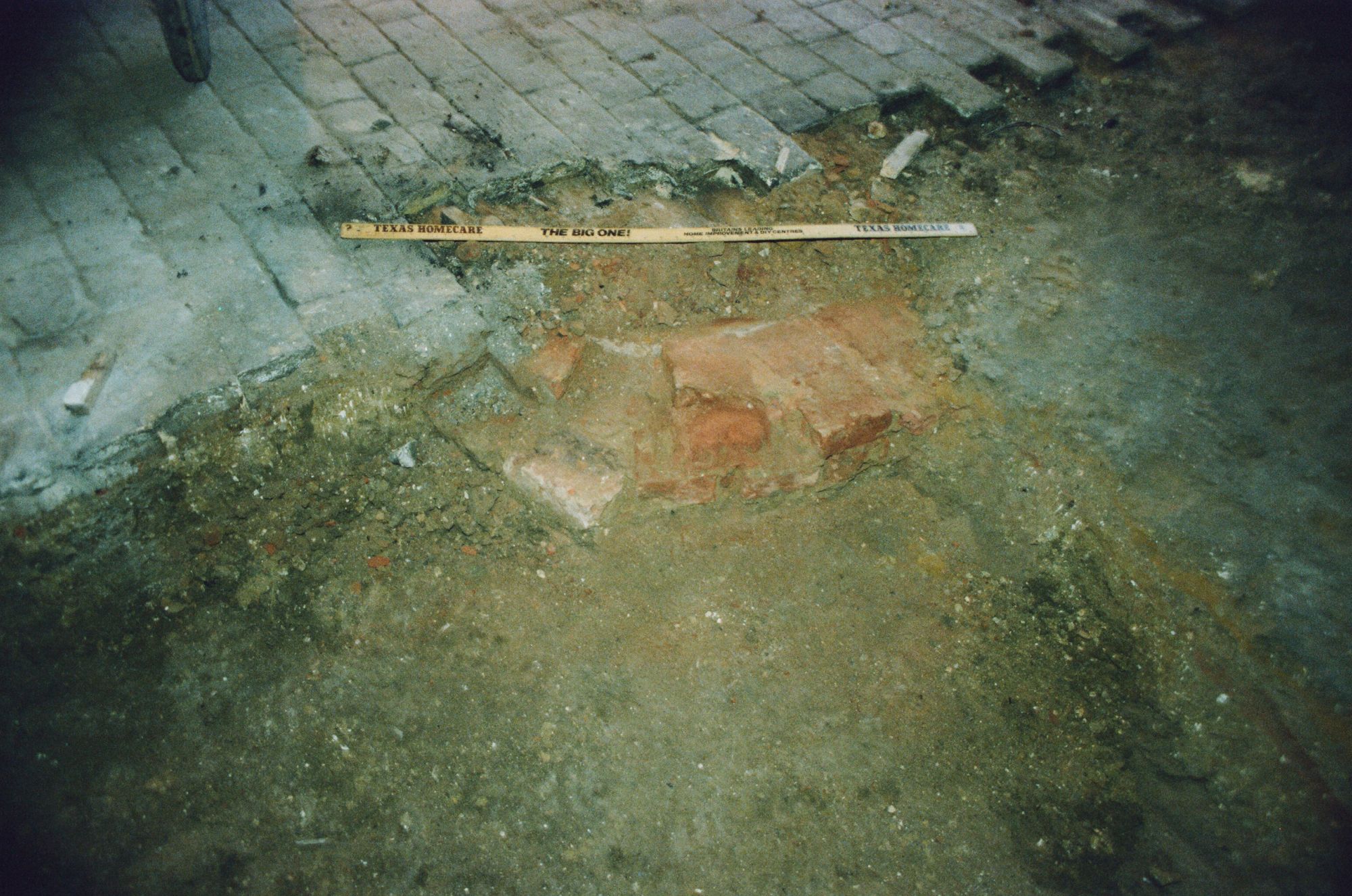
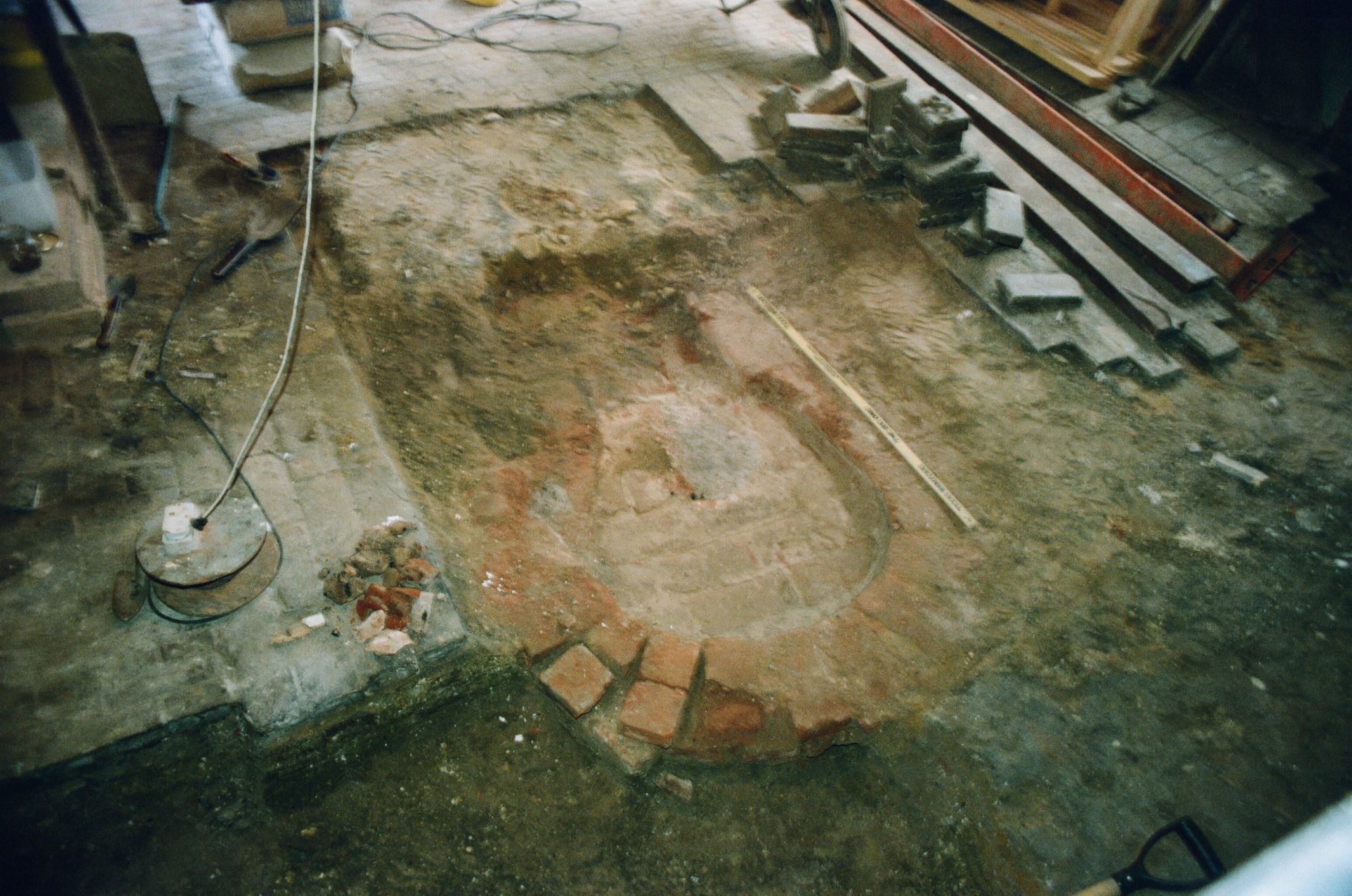
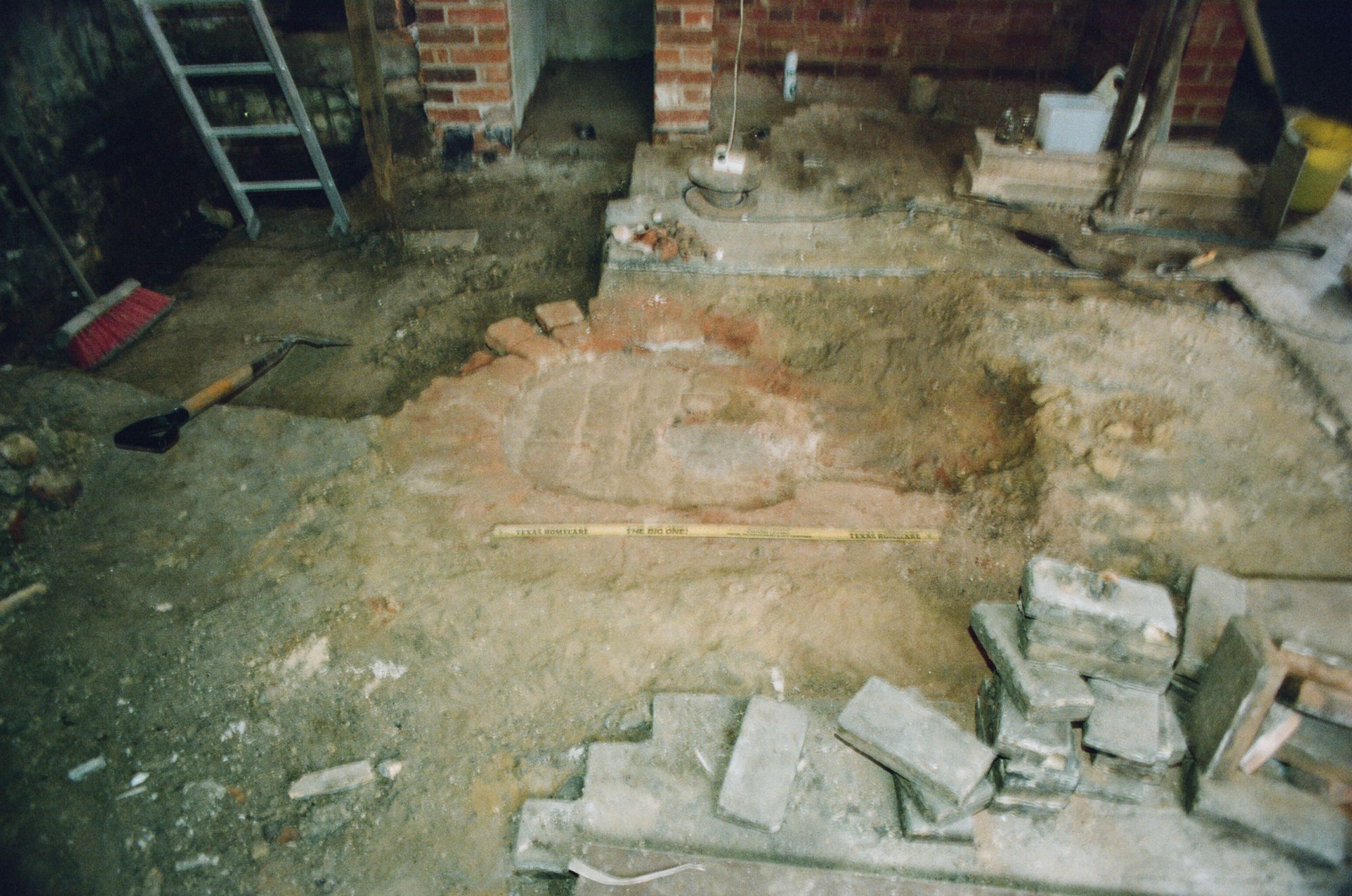
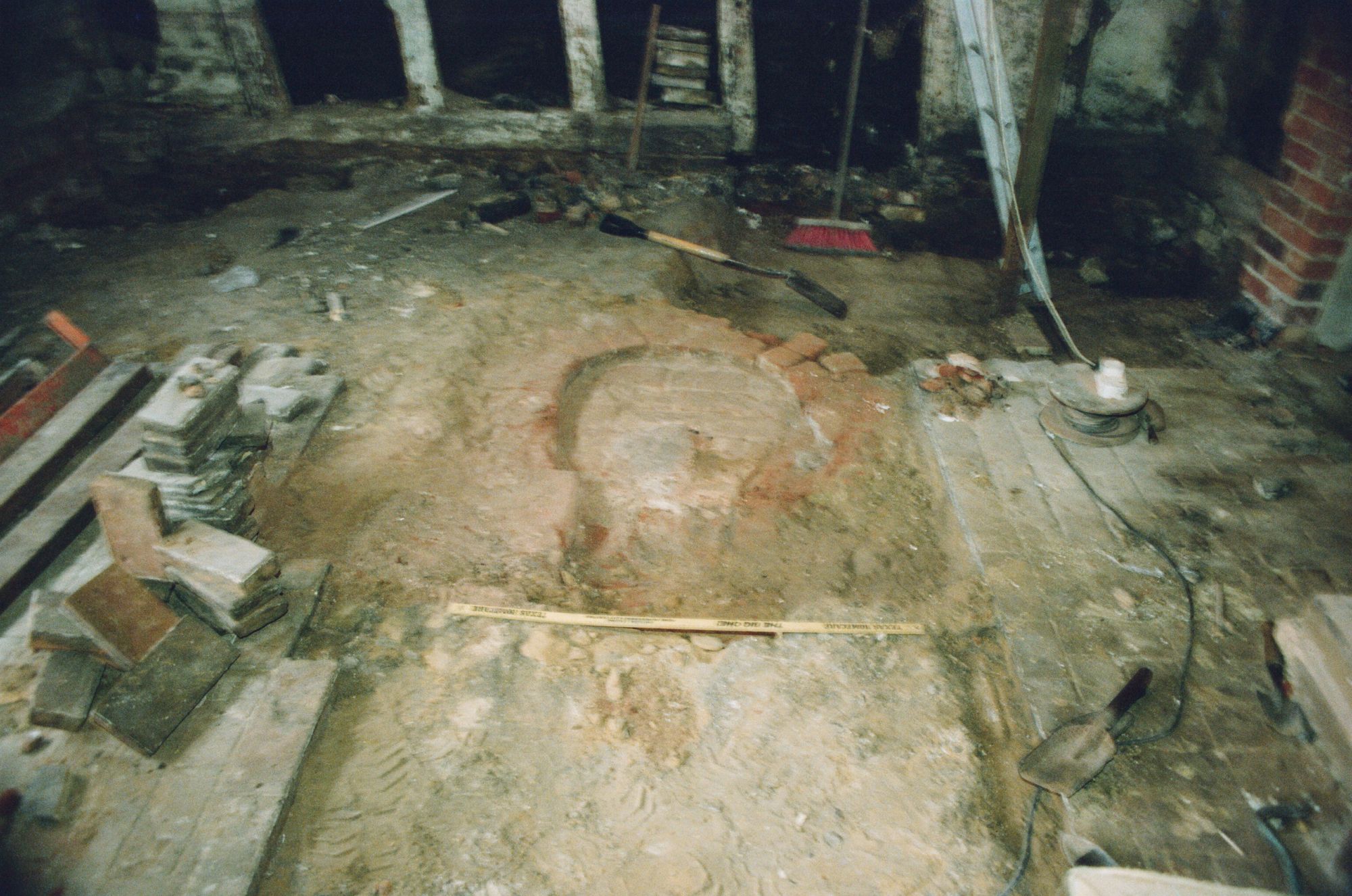
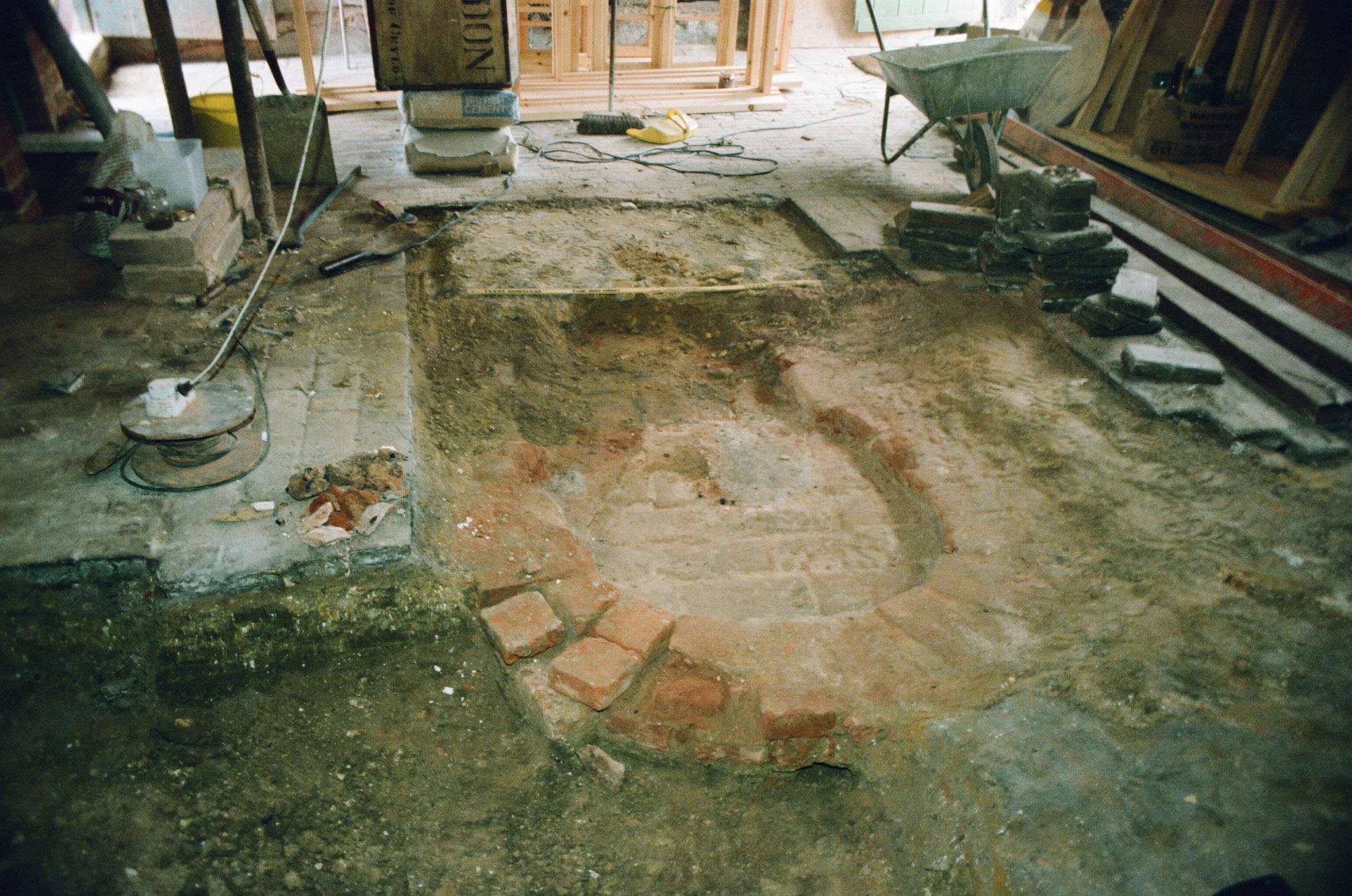
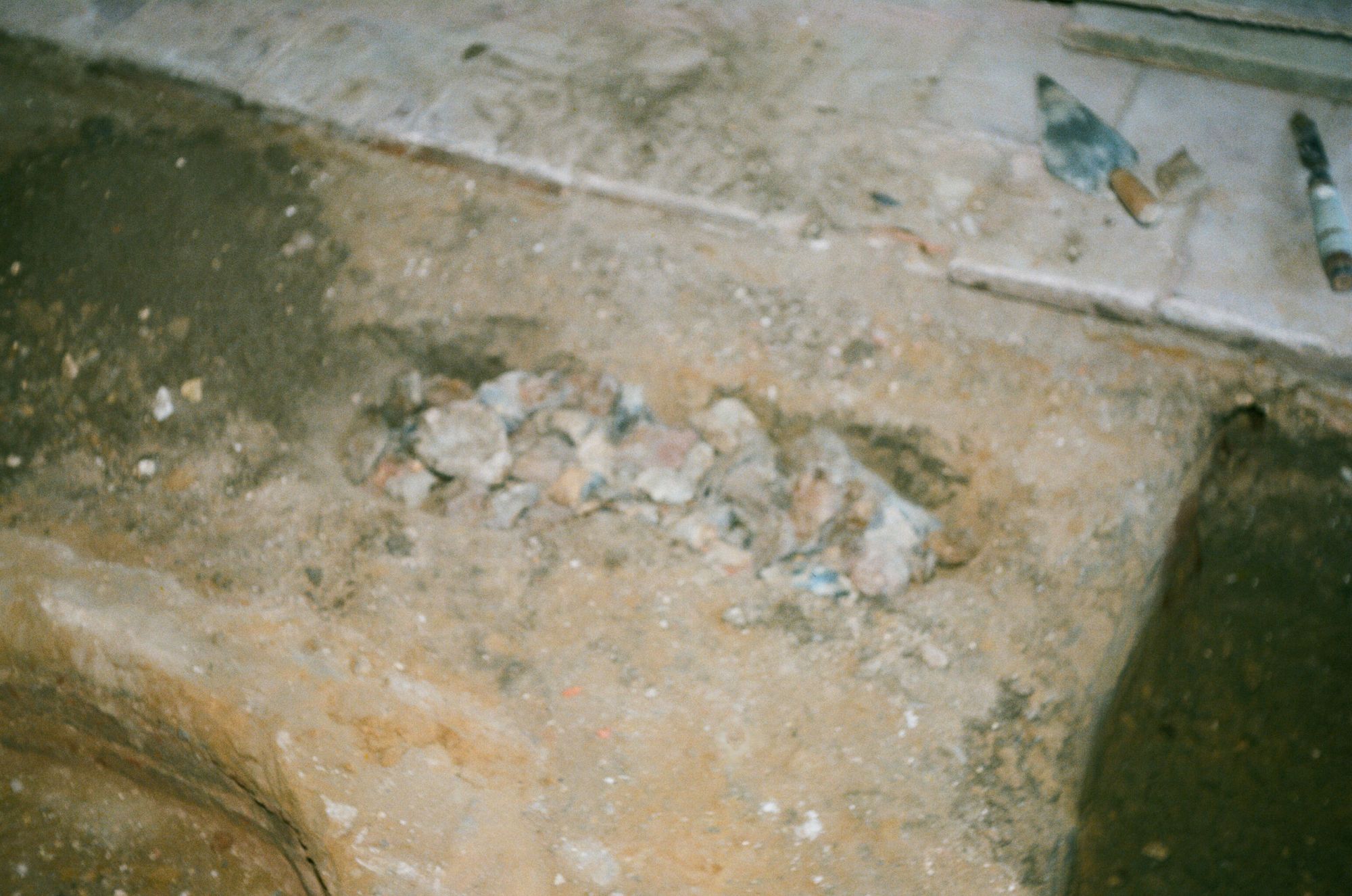
After excavating, Paul covered everything he had found with sand to protect it, and then laid a thin cement floor. Our builders removed the cement and our archaeologists found everything exactly as Paul had left it.
A demolished lean-to
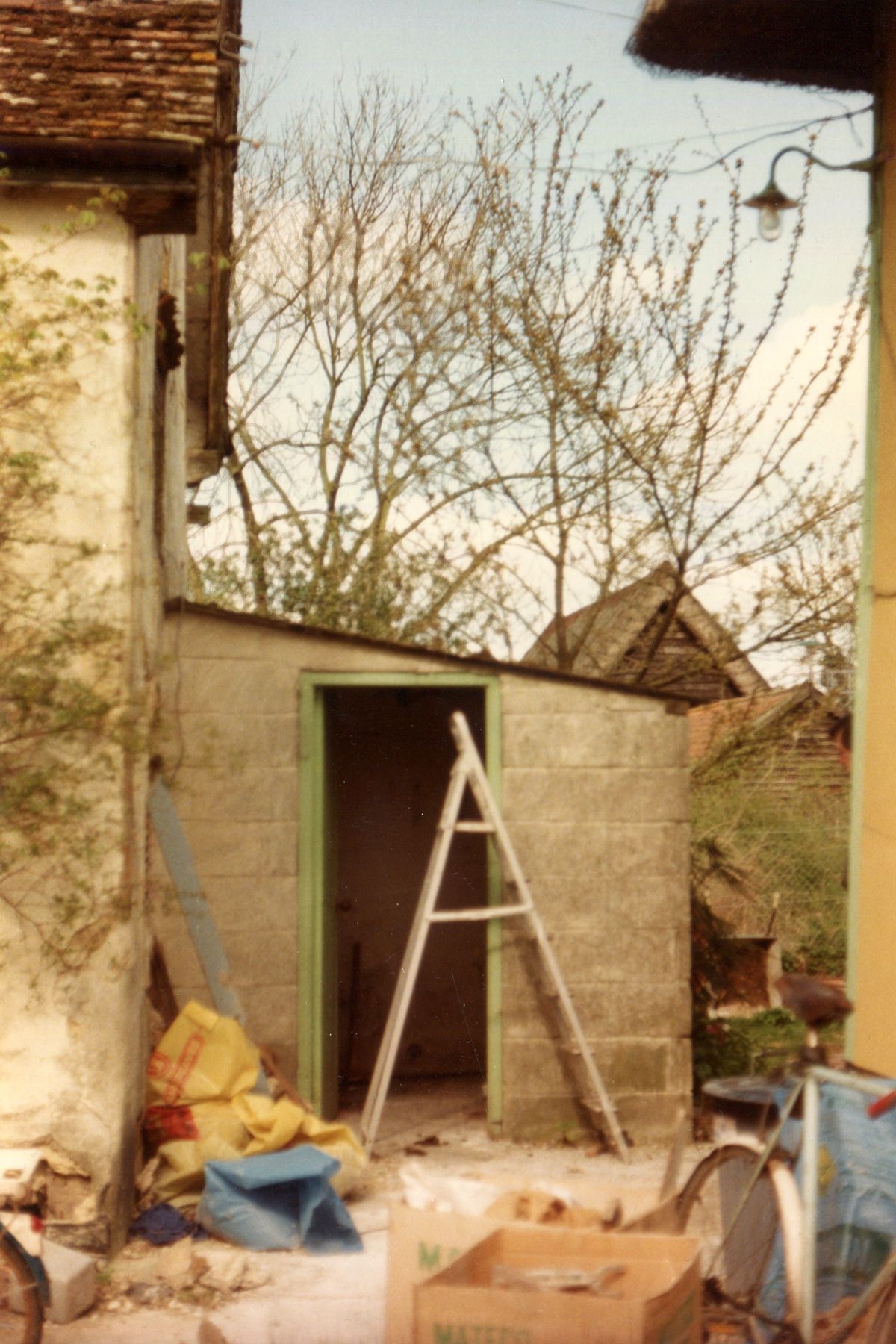
Finally, we have this photo of a modern lean-to on the north wall, partly blocking one of the kitchen windows. It was demolished before we arrived.
Paul made the house a great deal more manageable to live in, by inserting a new staircase in a central position to replace the awkward spiral stairs visible in one of the photos above, which are much more typical of this sort of building, and which are a feature of the farmhouse next door. That decision made it possible to have a decent-sized second bedroom. It helps as well to have all the additional light from the restored windows. The partitions he built to turn the two large upper rooms into two bedrooms, a bathroom and a landing were practical ways of using space.
Most of that work would be banned by the council’s heritage department today. We would probably have been forced to find different solutions at the planning stage if Paul had not made his changes before we arrived.
For an earlier article on Paul’s work, see Repairs before we bought
 saving The Old Brewhouse